Ziggy was under my desk, attached to the cuff of my jeans, while I tried to answer an email with one hand. He was a small terrier mix, but his teeth had the confidence of a much larger animal. Puppy biting can make a loving guardian feel overwhelmed quickly. It can also be completely normal development, communication, play, or a sign that your puppy needs help regulating excitement. The goal is not to punish the behavior out of existence. The goal is to understand it, prevent unnecessary rehearsals, and teach your dog what works better.
Why puppies bite in the first place
Puppies investigate the world with their mouths. They also practice social skills through play, learn how hard is too hard through feedback, and often become mouthier when they are tired or overstimulated. Teething adds another layer: sore gums create a strong motivation to chew, especially between roughly three and six months of age, when baby teeth are being replaced.
Puppy biting is therefore not a diagnosis of a difficult personality. A puppy who grabs sleeves after a busy evening is often running on an empty emotional battery, not plotting to control the household. A puppy who bites during wrestling may be trying to continue a game. A puppy who bites when someone reaches for a toy could be worried about losing something valuable. The same visible behavior can have different functions, so the useful question is, “What happened right before this?”
Keep a simple note for three days. Record the time, what your puppy was doing, who was nearby, and what happened immediately before and after the bite. You may notice a pattern: ankle chasing after dinner, hand grabbing during petting, or frantic nipping after a visit from friends. Patterns turn a frustrating blur into a training plan.
What to do in the moment
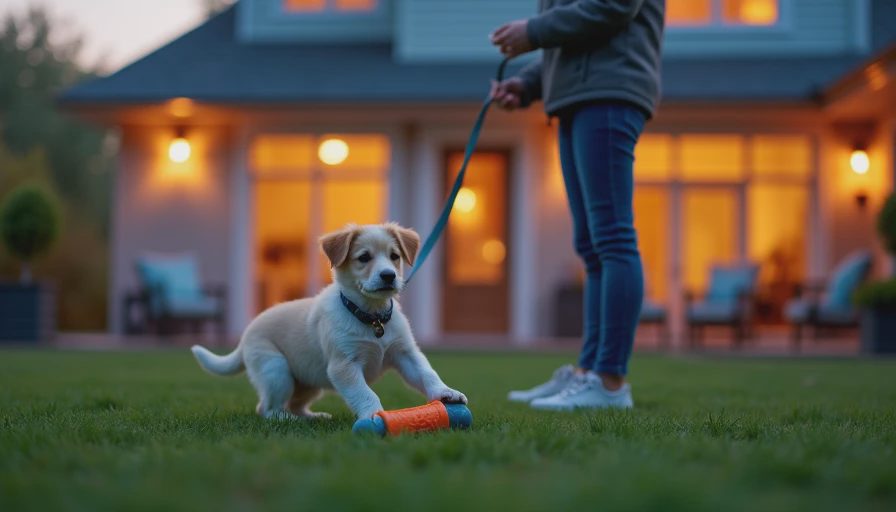
When teeth touch skin, freeze the body part rather than pulling it sharply away. Fast movement can turn your sleeve or hand into an exciting chase toy. Use a calm voice, bring a toy into the interaction, and praise your puppy for taking that toy. A long fleece tug, rubber chew, or food-stuffed toy gives your dog an appropriate answer to the question, “What should I bite?”
If your puppy keeps returning to skin, quietly end the interaction. Stand up, step behind a baby gate, or move to the other side of a pen for a brief reset. This is not a dramatic punishment or a “dominance” exercise. It is clear information: biting makes the game pause, while choosing a toy keeps the connection going. Puppy biting often decreases when every family member responds consistently.
Avoid yelling, pinning, holding the muzzle shut, or tapping the nose. These reactions can increase fear and excitement, and they do not teach a replacement behavior. The American Veterinary Society of Animal Behavior recommends reward-based training and advises against aversive methods. Respect the dog means respecting what the dog is learning from each interaction.
Prevent the bite before it starts
Management is not giving up on training. It is how you stop your puppy from practicing a behavior while new skills are developing. Keep toys in several rooms, especially near the sofa, kitchen, and entryway. Wear sturdy clothing during the wildest part of the day, and use gates to create a calm puppy zone with water, a bed, and safe chews.
Sleep is a major piece of this puzzle. Many young puppies need far more rest than their humans expect, sometimes around 18 hours in a day when naps are included. Your individual puppy may differ, but a pattern of frantic running, failed settling, and escalating nipping is a useful reason to offer a quiet nap. Puppy biting after an hour of intense play may be a fatigue problem, not a request for more exercise.
Build short, low-pressure activities into the day. Scatter kibble in a towel, practice hand targeting, let your puppy sniff on a slow walk, or offer a frozen food toy. Sniffing and chewing can be satisfying without pushing arousal higher. I learned this with Ziggy after repeatedly responding to his evening chaos with more games. He did not need a bigger party. He needed dinner, sleep, and fewer competing signals.
Teach useful replacement skills
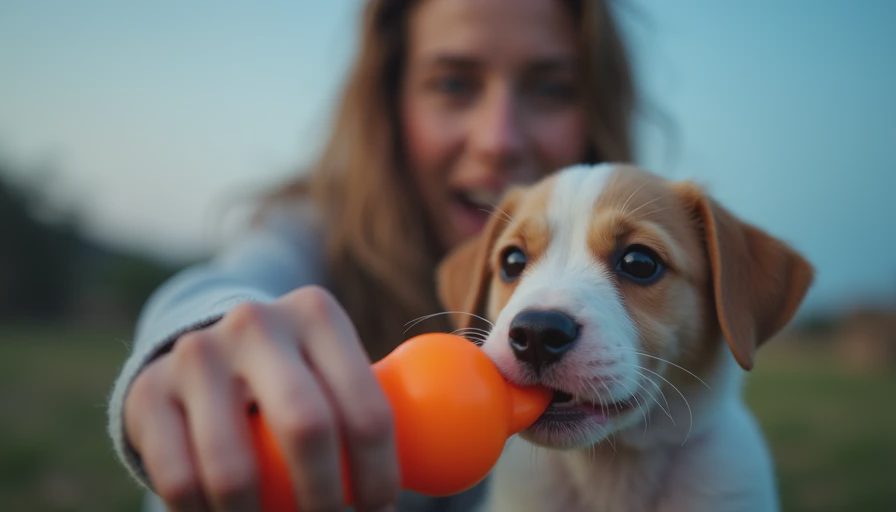
Start with behaviors that are easy to reward. Hold a treat in a closed hand. When your puppy stops mouthing and moves their nose away, open your hand and deliver the treat. Repeat several times, then add a quiet cue such as “leave it.” Keep sessions short enough that your dog can succeed.
You can also teach a toy exchange. Offer a tug toy, play for a few seconds, then hold a treat near your puppy’s nose. When the mouth releases the toy, mark the moment with “yes,” give the treat, and return the toy. This teaches that releasing an item does not always mean losing it forever. That matters for future handling, grooming, and safe household routines.
Reward calm contact, too. If your puppy sits beside you without grabbing clothing, place a treat between their paws. If they licks your hand gently rather than nipping, praise softly. Reinforcement works best when it arrives quickly and specifically. Instead of waiting for a perfect hour, notice the two-second moments you want to see more often.
When puppy biting needs professional help
Contact your veterinarian if the behavior appears suddenly, comes with signs of pain, or happens during handling that was previously comfortable. A veterinary examination can help identify medical contributors without assuming that the problem is purely behavioral. If anxiety seems involved, ask your veterinarian whether additional support, including medication, might be appropriate.
Seek help from an IAABC-certified behavior consultant or another qualified reward-based professional when bites are intense, break skin, happen during guarding, or are paired with stiff posture, freezing, growling, or repeated attempts to escape. Puppy biting during ordinary play is different from a puppy who cannot disengage or whose body language signals distress. A professional can assess the whole sequence and create a safety plan.
Do not wait for the behavior to become frightening before asking for guidance. Good support is not an admission that you failed. It is an efficient way to learn what your dog is communicating and protect the relationship while skills are still flexible.
A calmer plan for this week
For the next seven days, keep a toy within reach in every high-traffic room. Track when puppy biting happens and what precedes it. Schedule several quiet rest periods, reward gentle interactions, and end play calmly before your puppy becomes frantic. Ask every person in the home to use the same response: freeze, redirect, reward, and pause if needed.
Expect uneven progress. A puppy can have a thoughtful morning and then bite every shoelace at 8 p.m. That is not proof that training failed; learning is rarely linear. Look for small changes, such as softer pressure, quicker toy choices, or faster recovery after a pause. Those are meaningful data points.
The work is repetitive, sometimes inconvenient, and occasionally hilarious in the way only a puppy wearing one sock can be hilarious. It is also an opportunity to build trust. Your puppy is not bad, and you are not behind. Lead with curiosity, make the safe choice easy, and get skilled help when the picture is bigger than a chew toy. Respect the dog.


Talkback
0