Ziggy was under the dining table, shaking, while the brand-new wire crate sat nearby like an accusation. I had imagined a tidy little den. He saw a metal box standing between him and safety. That moment changed how I approached dog crate training. The goal is not to make a dog tolerate confinement because a human wants convenience. The goal is to build enough positive association, predictability, and choice that the crate becomes one safe option.
Crates can help with travel, veterinary recovery, house-training, and brief periods when supervision is impossible. They are not treatment for separation anxiety, and they should never be used as punishment. Respect the dog first; the practical benefits follow.
What a crate can and cannot do
A crate is management, not a personality transplant. It can prevent a puppy from chewing electrical cords while you answer the door, give a recovering dog a quiet place to rest, or make a road trip safer. It does not teach a distressed dog that being alone is harmless. If your dog pants heavily, drools, bites the bars, tries to escape, vocalizes continuously, or injures themselves, closing the door longer is not dog crate training. It is exposure beyond that dog’s current capacity.
That distinction mattered with Ziggy. His panic was about separation, not disobedience. A crate initially removed his ability to move away, so we paused confinement work and spoke with our veterinarian about the broader anxiety picture. If your dog shows intense distress, sudden behavior change, or repeated escape attempts, schedule a veterinary check and consider an IAABC-certified consultant or a veterinary behaviorist. Medical discomfort can affect behavior, and a trainer should not diagnose or prescribe.
Choose a crate large enough for the dog to stand, turn around, lie down comfortably, and stretch out. A divider can adjust the space as a puppy grows, but do not make the interior so small that normal movement is restricted. Place it in a lived-in area, away from direct heat and household traffic. A washable mat is useful only if your dog does not shred or swallow bedding.

A step-by-step starting plan
Good dog crate training begins with the door open. Toss a high-value treat near the entrance, then farther inside. Let the dog come back out immediately. Repeat during calm moments, using food that beats ordinary kibble: tiny pieces of chicken, a soft training treat, or part of a meal delivered in a food-stuffed toy.
When your dog is choosing to enter, place several treats inside and wait. Do not reach in, corner the dog, or pull them out by the collar. Add a simple cue such as “crate” only after the behavior is happening reliably; the cue should predict something pleasant rather than announce confinement.
Next, briefly touch the door and open it. Then close it for one second, feed through the bars, and open it before concern appears. Build duration in small, uneven increments: two seconds, five seconds, three seconds, eight seconds. The variation prevents the dog from learning that every repetition lasts longer and longer. During dog crate training, calm behavior is information. A relaxed dog is ready for another small step; a tense dog is asking for an easier one.
Practice while you remain nearby. Sit beside the crate and read, answer emails, or drink coffee. Later, stand up, walk across the room, and return. Only after those pieces are boring should you try stepping out of sight. Keep sessions short enough that you can finish with success.
Read the traffic lights
Green means your dog enters willingly, eats, has loose muscles, and can settle or nap. You can repeat the current level and occasionally test a slightly harder version.
Yellow means the dog pauses at the entrance, scans the room, stops taking food, shifts position repeatedly, or gives a brief whine. Lower the difficulty by opening the door, shortening the interval, moving closer, or returning to an easier room setup. Yellow is not failure; it is useful data.
Red means frantic scratching, bar biting, escape attempts, sustained panic, heavy panting unrelated to heat, or self-injury. End the exercise as safely and calmly as possible, then get professional guidance. Do not wait for exhaustion and call it settling. In dog crate training, quiet after panic can mean the dog has shut down, not that learning occurred.
My most useful log had four columns: date, setup, longest relaxed interval, and body-language notes. “Tuesday, kitchen, 12 seconds, ate chicken and turned away” told me more than “did better.” It also stopped me from accidentally increasing difficulty because I felt impatient.
Common mistakes that create resistance
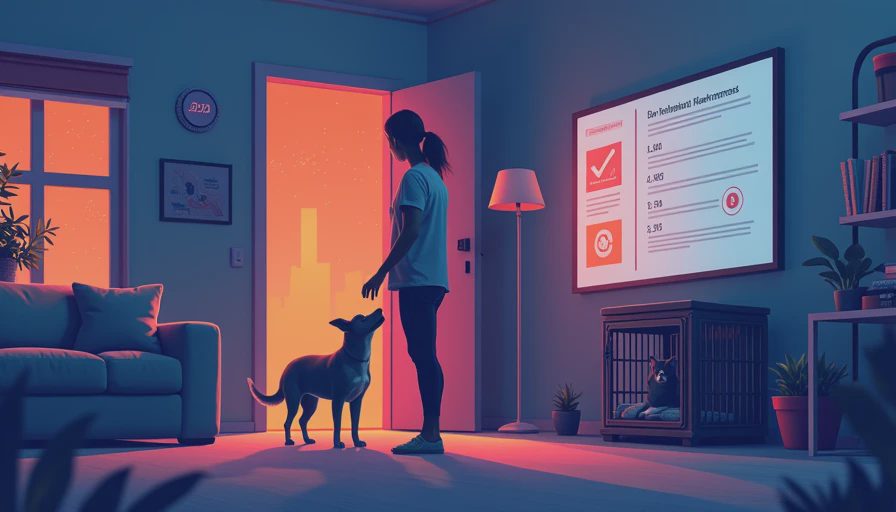
The first mistake is using the crate only before unpleasant events. If it appears solely before a bath, car ride, or departure, the dog can learn that the crate predicts something they dislike. Feed occasional meals nearby or inside, offer a safe chew while you are home, and leave the door open during ordinary relaxed periods.
The second mistake is releasing a dog only after frantic vocalizing. Safety comes first, and you should not trap a panicking animal to prove a point. But plan easier repetitions so the door opens while the dog is still coping. For a puppy who complains briefly, wait for a small pause before releasing when it is safe to do so; avoid turning prolonged distress into a battle.
The third mistake is asking for too much duration too soon. A dog who calmly manages five minutes is not automatically ready for thirty. Add one variable at a time: door closed, distance, duration, household noise, then a brief departure. If you change all five together, you will not know what caused the setback.
Never use the crate for a time-out after growling, stealing food, or having an accident. That makes the safe place less safe and can suppress communication without changing the underlying emotion. Dog crate training works best when the crate predicts rest, food, and control—not social isolation.
When the crate is not the right tool
Some dogs relax more successfully behind a baby gate in a puppy-proofed room, an exercise pen, or a bedroom with the door open. A crate is not morally superior to those options. If your dog has a history of confinement distress, begin with the least restrictive safe arrangement and consult a professional before narrowing the space.
For separation-related panic, dog crate training alone can worsen the picture. A veterinarian can discuss whether medical support is appropriate, while a qualified behavior professional can help design gradual absences that stay below panic. Ask about credentials, methods, and whether the plan uses reward-based behavior change. Shock collars, intimidation, and advice to “let the dog cry it out” do not address fear with the care it requires.
A realistic daily routine
Morning can include breakfast in or beside the open crate, followed by a walk and rest. Midday, practice three easy door repetitions while you sit nearby. In the evening, offer a chew with the door open, then try one brief closed-door interval if the dog is green. End before you are tempted to squeeze in “one more.”
The timeline will differ for a confident puppy, an adult rescue, and a dog who has been trapped before. Progress can look like entering without hesitation, resting near the crate, or recovering quickly after a minor challenge. Those are meaningful changes even when the door is not closed for long.
Dog crate training is successful when the dog has a trustworthy refuge and the guardian has a reliable management option. Go slowly, record what you observe, and adjust the environment instead of blaming the animal. If fear is loud, persistent, or unsafe, bring in help early. Respect the dog.

Talkback
0