Ziggy was under the dining table, looking deeply offended, while I stared at a fresh puddle beside the water bowl. I had an IAABC certification in my future, a spreadsheet on my laptop, and absolutely no idea what I was doing at 6:14 a.m. A puppy potty training schedule sounded simple until sleep deprivation, missed signals, and an anxious little terrier mix entered the picture.
The useful version is not a rigid timetable that treats every puppy like a clock. It is a flexible pattern built around age, sleep, food, play, and individual learning. A puppy potty training schedule gives you enough structure to prevent accidents while helping your dog understand what earns relief and praise. Respect the dog, then adjust the plan based on what the dog is actually telling you.
How often should a puppy go outside?
Young puppies have limited bladder control, especially when they are awake and excited. A rough starting point is a bathroom trip after waking, after eating, after drinking a substantial amount, after play, and before bed. Many puppies also need a trip every 30 to 60 minutes during active daytime periods. Sleeping puppies can often wait longer, but that is not a challenge to test aggressively.
Age provides a starting estimate, not a promise. A two-month-old puppy may need frequent trips, sometimes every 30 minutes while playing. A three-month-old puppy may manage closer to 45 or 60 minutes when calm. Larger puppies are not automatically ready faster, and rescued puppies may need time to learn your household routine. Stress, excitement, illness, and changes in water intake can all alter the pattern.
For the first several days, take notes instead of relying on memory. Record meals, naps, outdoor trips, successful elimination, and accidents. Those notes turn a vague puppy potty training schedule into information you can use. If accidents cluster 20 minutes after wrestling with a toy, the next trip happens before the wrestling begins.
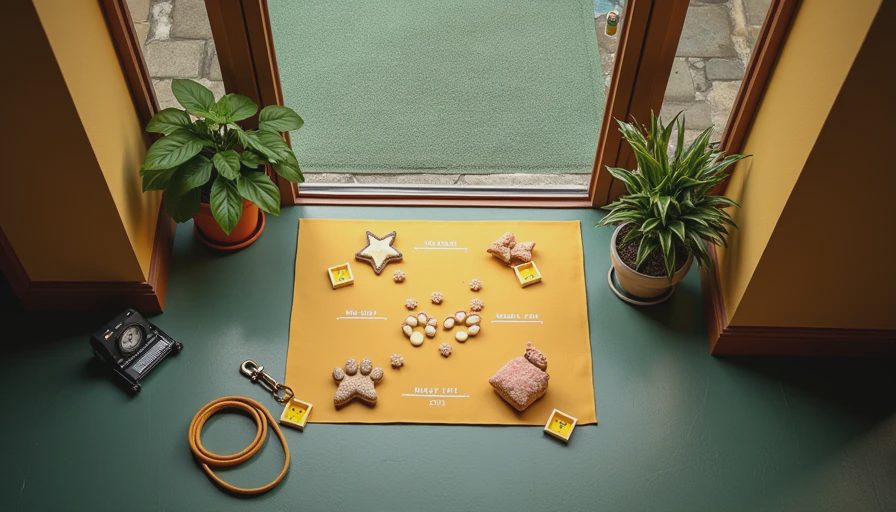
A practical puppy potty training schedule
Here is a workable daytime template for a young puppy. Shift the times to match your household rather than forcing your life around an imaginary perfect dog.
7:00 a.m.: Go outside immediately after waking.
7:15 a.m.: Serve breakfast, then return outside about 10 to 20 minutes later.
8:00 a.m.: Take another short trip after gentle play or training.
9:30 a.m.: Go outside after a nap.
11:00 a.m.: Offer a bathroom break before lunch or a longer rest.
12:30 p.m.: Go out after lunch, then again after active play.
2:30 p.m.: Take a trip immediately after the afternoon nap.
4:30 p.m.: Go out before and after a play session.
6:00 p.m.: Take a post-dinner trip, followed by a calm walk or sniffing time.
8:00 p.m.: Offer one final evening break before settling.
10:00 p.m.: Take the last trip before bedtime.
The repeated pattern matters more than the exact times. If your puppy eats at 6:30 instead of 7:00, move the next trip accordingly. A puppy potty training schedule should reduce guesswork, not create guilt when real life interrupts it.
Make outdoor success easy to understand
Choose one bathroom area and walk there on leash. Keep your voice quiet and your body boring until your puppy finishes. Some puppies become distracted by leaves, traffic, or a neighbor’s cat and then urinate on the rug five minutes later. Give them time to sniff, circle, and settle into the task.
The instant your puppy finishes, offer calm praise and a small, appealing treat. The timing matters: reward after elimination, not after returning inside. Then allow a minute of sniffing or a brief game so going potty does not always mean the fun ends. This prevents the puppy from learning to hold it simply to extend outdoor time.
Use the same cue, such as go potty, only while the puppy is already eliminating. Repeating the cue during an unsuccessful ten-minute standoff teaches little. Your goal is a clear association between the location, the behavior, and the consequence. That is applied learning, not bribery.
What to do when accidents happen
An accident is information, not evidence of defiance. If you catch your puppy beginning to eliminate, use a gentle interruption such as their name, then move quickly outside. Praise any remaining success outdoors. Avoid yelling, rubbing their nose in it, or creating a dramatic reaction; those responses can make a puppy hide elimination rather than learn where it belongs.
Clean the area with an enzymatic cleaner made for pet urine. Standard household cleaners can leave odor molecules behind that invite repeat visits. Block access to frequently soiled areas until your puppy has built a stronger history of success. If accidents happen repeatedly in one room, the management problem may be access rather than motivation.
When reviewing your puppy potty training schedule, ask three practical questions. Was the last trip too long ago? Did excitement, food, water, or sleep change the usual pattern? Could the puppy have reached the door but lacked a clear way to ask? Each answer suggests a small adjustment.

Crate time, supervision, and freedom
A crate can support house training when it is introduced as a comfortable resting space, never as punishment. The crate should allow standing, turning, and stretching without becoming so large that one end becomes a bathroom. Even then, a crate is not a substitute for regular outdoor access. Puppies forced to soil their sleeping space may become distressed, not magically trained.
When your puppy is awake, supervision is your strongest tool. Keep the puppy near you with a leash, use a puppy-proof pen, or close doors to rooms with tempting rugs. Freedom expands after repeated success, one room at a time. If your puppy has three accidents after gaining access to the whole house, reduce the area and rebuild gradually.
A puppy potty training schedule also needs a plan for absences. Arrange a trusted person, a midday visit, or a safe pen with an appropriate temporary toilet option when a puppy cannot physically hold it. Indoor pads can be useful in some living situations, but they can also create a preference for soft surfaces. Choose deliberately and transition gradually if outdoor elimination is your long-term goal.
When progress stalls
Look for trends over several days rather than judging one bad morning. Improvement might mean fewer accidents, faster elimination outside, or better signals at the door. Reliable house training often develops unevenly: a puppy may succeed for a week and then regress during teething, travel, visitors, or a schedule change.
If your puppy suddenly urinates much more often, strains, shows discomfort, drinks unusually large amounts, or cannot stay clean despite careful management, contact a veterinarian. Behavior plans cannot diagnose urinary, gastrointestinal, or other medical problems. Your veterinarian can determine whether a health issue is contributing.
For anxiety, fear, or persistent distress around elimination, consider help from a qualified force-free trainer or behavior consultant. A professional can observe the environment, identify hidden triggers, and make the puppy potty training schedule more realistic for your household. Getting support is not failure; it is efficient troubleshooting.
A simple daily review
At the end of each day, write down the longest successful interval, the times accidents occurred, what happened immediately beforehand, and what reward your puppy enjoyed. Then make one change for tomorrow, not ten. Maybe the morning trip needs to happen before coffee. Maybe play needs to be followed by an immediate outdoor visit. Small, measurable adjustments beat frantic reinvention.
The clean floor will come, but the deeper win is communication. Your puppy learns that you notice their needs, provide predictable opportunities, and respond without fear. That foundation supports every behavior you will teach later. Respect the dog, keep the receipts, and let the schedule serve the relationship.

Talkback
0