The first time I tried french bulldog training with a client’s dog, he planted all four feet on the sidewalk, sighed dramatically, and watched a leaf roll past as if it were a documentary. His guardian whispered, “He knows what I want.” Maybe. But knowing a cue and feeling safe enough to respond are different skills. French bulldogs are often social, funny, physically sensitive dogs with strong opinions and short bursts of energy. Effective training starts by working with that reality, not arguing with it.
Start with comfort, not compliance
Before asking for a sit, examine the environment. Is the pavement hot? Is the harness rubbing behind the front legs? Is the room noisy, or is your dog tired after a poor night of sleep? French bulldogs can be prone to breathing difficulty, overheating, and orthopedic discomfort, so training sessions should be brief and physically gentle. Talk with your veterinarian about pain, breathing, skin irritation, or exercise limits before treating a sudden behavior change as a training problem.
Good french bulldog training uses rewards the dog actually values. Soft treats, tiny pieces of cooked chicken, a favorite toy, sniffing time, and access to a person can all work. Start with a simple pattern: say the dog’s name, wait for a glance, mark the glance with a calm “yes,” then deliver the reward. Repeat five times and stop while your dog is still interested. You are building a habit of checking in, not conducting an endurance test.
I made the classic mistake with Ziggy, my terrier mix, of adding more repetitions when he was already mentally gone. The result was not better learning; it was a dog under the table and me crying beside the dishwasher. Dogs do not become more capable because we become more determined. Respect the dog, lower the difficulty, and collect cleaner repetitions.
Teach the skills that make daily life easier
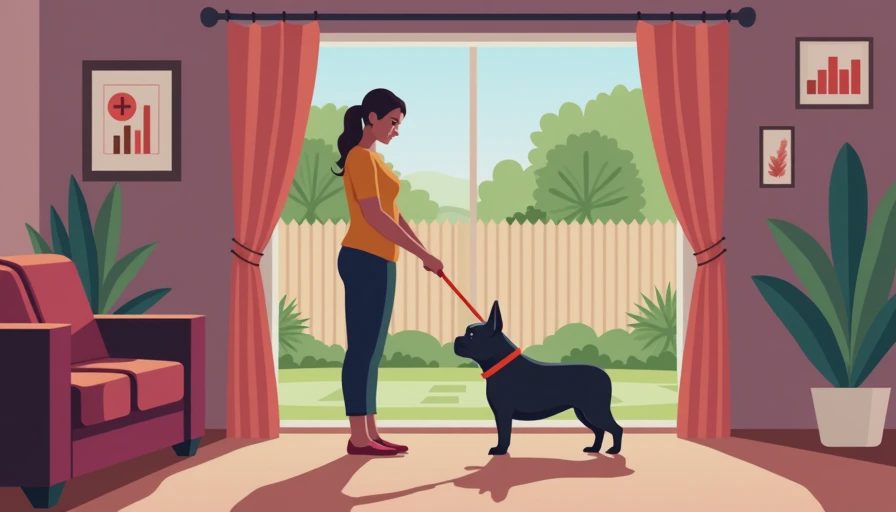
French bulldog training does not need a circus routine. Prioritize behaviors that reduce conflict and increase choice. A hand target can guide your dog away from a doorway without grabbing the collar. A mat cue can create a predictable resting place while you answer the door. A cheerful recall can help your dog move toward you in a yard. Loose-leash walking can make the block feel manageable instead of like a tug-of-war with a compact tank.
Teach one piece at a time. For a mat cue, place the mat near you and reward any investigation. Then reward one paw, two paws, standing on it, and eventually lying down. Add duration in seconds before adding distance. If your dog leaves repeatedly, the step is too difficult, not proof of stubbornness. Keep rewards frequent at first; later, you can vary them while continuing to reinforce the behavior.
For leash work, begin indoors or in a quiet hallway. Reward a slack leash beside you, take one step, and reward again. Outside, use a traffic-light system. Green means your dog can eat, sniff, and respond. Yellow means the environment is becoming more exciting, so increase distance or use better treats. Red means your dog is lunging, freezing, panting hard, or unable to eat. Leave the situation and recover. Training cannot happen when the nervous system is overloaded.
Build calm around people and dogs
Many guardians search for french bulldog training because greetings have become chaotic. A dog who jumps, spins, or barks is not necessarily trying to dominate anyone. The behavior may be driven by excitement, frustration, fear, or a learned history of getting access to attention. Begin far enough away that your dog can notice a person or dog and still take food. Mark the glance, feed, and then let your dog look away. This teaches that seeing the trigger predicts safety and choice.
Do not force greetings. Ask visitors to ignore your dog initially, turn sideways, and toss treats away from their bodies. A dog who chooses to approach can gather information without being touched. If the dog retreats, honor that retreat. A baby gate, leash held loosely, or quiet room can protect everyone while skills develop. Management is not failure; it is how you prevent rehearsal of behavior you are trying to change.
Research on reward-based methods, including the American Veterinary Society of Animal Behavior’s position on humane training, supports teaching through reinforcement rather than fear or pain. Shock collars, leash corrections, and intimidation can suppress visible behavior while increasing distress. I would rather see a guardian spend $20 on a long-lasting chew and a few minutes arranging distance than spend money repairing trust after a punishment-heavy program.

A practical weekly plan
Use french bulldog training like a small experiment. On Monday, practice name response and hand targeting for three minutes in the kitchen. On Tuesday, add the mat while you prepare coffee. On Wednesday, take five quiet leash steps in the driveway. On Thursday, repeat the easiest exercise and record what changed. On Friday, practice around one mild distraction. Leave the weekend for rest, sniffing, and ordinary life rather than cramming every skill into one ambitious session.
Keep a simple log with four columns: situation, distance or difficulty, behavior you saw, and what helped. If your dog ignored chicken near the dog park but ate kibble at home, that is useful information. The park was probably too difficult. If your dog could settle for two minutes yesterday and only thirty seconds today, sleep, heat, pain, or a stressful event may be part of the picture. Look for patterns over several days instead of judging one session.
Choose equipment for comfort and control. A well-fitted harness is often more practical than attaching a leash to a neck collar, especially for a dog with breathing concerns, but fit matters. Avoid equipment that restricts the shoulders, rubs the skin, or encourages force. A six-foot leash, treat pouch, washable mat, baby gate, and high-value treats are enough to begin. Fancy gear cannot replace a workable plan.
When to bring in professional help
Seek help early if your dog is snapping, guarding food, panicking when alone, fighting with another household dog, or reacting intensely on walks. A qualified reward-based trainer can teach mechanics; an IAABC-certified consultant or veterinary behaviorist can help with complicated emotional and safety concerns. A veterinarian should evaluate possible medical contributors and discuss whether anti-anxiety medication might be appropriate. Medication is not a training shortcut, and training is not a substitute for medical care.
Ask a professional what they do when a dog refuses a cue. A thoughtful answer should involve changing distance, reinforcement, setup, or criteria. Be cautious around anyone promising a fixed timeline, describing your dog as dominant or spiteful, or insisting that fear is the only route to respect. French bulldog training should leave the dog more able to cope, not merely quieter because the dog is afraid to respond.
The goal is not a perfectly obedient dog who never has an opinion. It is a dog who can recover, communicate, and participate in ordinary life with less conflict. Some days that looks like a calm walk. Some days it looks like choosing the quiet route and celebrating three good check-ins. Those are real gains. Start small, measure kindly, and adjust without shame. Respect the dog.


Talkback
0