Ziggy was under the dining table, shaking so hard his tags clicked against the floor. Ten minutes earlier, he had barked and lunged at a dog across the street. I had apologized, dropped half my treat pouch, and briefly considered moving somewhere without sidewalks. If you are searching for dog reactivity training, you may know that particular cocktail of embarrassment, worry, and love.
Here is the first thing I want you to hear: your dog is not bad, dominant, or plotting to ruin your morning. Reactivity is a visible response to an emotional state. A dog may be frightened, frustrated, overexcited, or trying to create distance. Dog reactivity training works best when we address that underlying feeling while preventing repeated explosions.
What reactivity actually means
A reactive dog responds intensely to a particular trigger, such as another dog, a person in a hat, a skateboard, a car, or a sound. Barking and lunging are common, but freezing, whining, staring, spinning, or suddenly refusing food can also be part of the picture. Reactivity is not the same as aggression, although any dog can bite when overwhelmed, so safety comes first.
Think of your dog’s nervous system as having a working range. Below the threshold, your dog can notice a trigger and still eat, sniff, respond to their name, or turn with you. Above the threshold, the thinking part of the brain has far less access to those skills. Repeating “sit” louder will not restore that access. Distance, quiet, and recovery time are more useful.
This is why dog reactivity training is not a test of obedience. It is behavior modification built around changing associations and teaching practical alternatives. Research on classical counterconditioning and desensitization supports pairing a difficult stimulus with something safe and rewarding, but the setup has to stay below the dog’s panic point.
Start with management, not bravery
Management is not giving up. It is the seat belt that lets learning happen. For now, choose routes with wide sidewalks, open sightlines, and easy exits. Walk at quieter times, cross the street early, and use parked cars or hedges as visual barriers. A properly fitted harness and standard six-foot leash usually give you more control than a retractable leash.
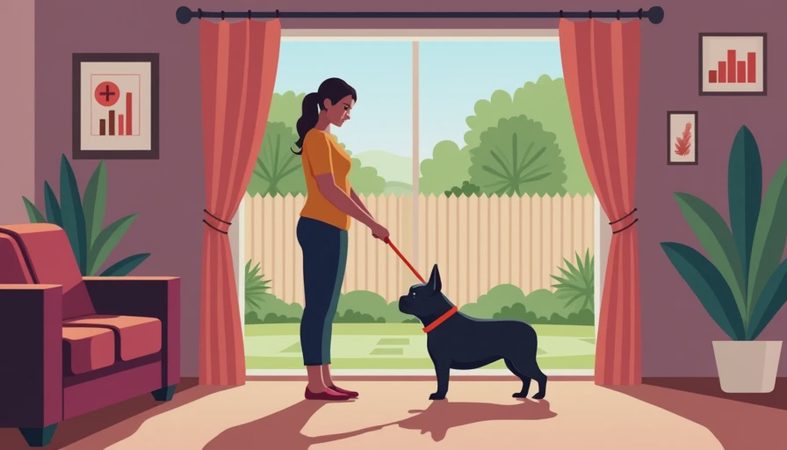
Build a small emergency kit: soft, high-value treats, a treat pouch, waste bags, and a favorite toy if your dog enjoys play outdoors. Practice a cheerful “this way” turn inside your home, then in a hallway, then on a calm block. The goal is not to drag your dog away. It is to make leaving with you predictable and rewarding.
A basket muzzle can be a responsible safety tool for some dogs, but it must be introduced gradually with positive reinforcement. It should allow panting, drinking, and taking treats. Never strap one on for the first time during a stressful encounter. If there has been a bite, contact a qualified behavior professional and your veterinarian for a safety plan.

The traffic-light threshold check
Use this quick traffic-light system during dog reactivity training:
Green means your dog can notice the trigger, eat treats, sniff, and respond to an easy cue. Stay at that distance and reward calm observation.
Yellow means your dog is staring, closing their mouth, leaning forward, slowing down, or ignoring food. Increase distance immediately. Do not wait for barking to confirm the problem.
Red means barking, lunging, spinning, freezing, or frantic pulling has started. Say as little as possible, create distance, and get behind a barrier if you can. The session is over when your dog can breathe normally and move with you again.
Record three details after each outing: the trigger, the approximate distance, and your dog’s recovery time. My early notes on Ziggy looked comically precise because I was still thinking like a product manager, but the pattern mattered. A dog at 80 feet might eat chicken; at 40 feet, Ziggy could not hear his own name. That difference told me where to train.
A humane training session, step by step
First, locate a distance where your dog is in the green zone. This may be across a field, behind a fence, or inside your parked car while another dog walks past. The exact distance is information, not a grade.
Second, let your dog notice the trigger. The moment they see it, feed several small treats in a row. When the trigger disappears, the food stops. You are not bribing the dog to endure something terrifying. You are building a new prediction: trigger appears, good things happen, and the handler helps me stay safe.
Third, pause before repeating the setup. Watch breathing, body softness, and willingness to sniff. If your dog remains comfortable over several repetitions, you can very gradually reduce distance on a future session. Changing two variables at once, such as getting closer while adding movement, makes it harder to understand what caused a setback.
This is the heart of effective dog reactivity training: small exposures, meaningful rewards, and enough recovery between attempts. Five calm minutes can teach more than a forty-minute walk filled with rehearsed lunging.
Common mistakes I made first
I used to wait for Ziggy to “get used to it.” He did not habituate; he practiced panic. Flooding a dog with an overwhelming trigger can increase fear and make future reactions stronger. I also tried to walk closer because a trainer told me he needed to learn who was in charge. The result was a red-faced dog, a tangled leash, and me crying beside a recycling bin.
Other common errors include correcting barking with leash jerks, using shock or prong collars, allowing surprise greetings, and scheduling difficult encounters every day without rest. Aversive tools can suppress visible behavior while increasing fear or frustration. They also make it harder for a dog to trust the person holding the leash.
Instead, measure progress by recovery and flexibility. Can your dog turn away sooner? Can they eat after noticing a trigger? Can you complete one block with fewer surprises? Those changes are real, even when your dog still barks sometimes.

When professional help belongs in the plan
Contact your veterinarian if reactivity appears suddenly, worsens quickly, or comes with pain, sleep changes, unusual sensitivity, or other physical changes. Medical issues can affect behavior, and a veterinarian can discuss whether anti-anxiety medication might be appropriate. Medication is not a shortcut or a failure; for some dogs, it creates enough emotional room for learning.
Look for an IAABC-certified consultant, a veterinary behaviorist, or a trainer with substantial experience in fear and aggression cases. Ask what equipment they use, how they handle safety, and whether they can explain the learning theory behind their recommendations. Be cautious of anyone promising a fixed dog in a weekend or insisting that every reaction reflects dominance.
A useful first appointment should produce a management plan, trigger history, realistic goals, and instructions you can follow between sessions. Bring your notes and, if safe, a short video recorded from a distance. Never stage a close encounter just to provide footage.
Your next seven days
For the next week, skip crowded routes and count calm observations rather than forcing practice. Prepare treats before opening the front door. Practice five easy “this way” turns indoors each day. On walks, reward your dog for checking in, sniffing, and noticing triggers without escalating. End early after a good repetition.
Dog reactivity training is not a straight line. Weather, pain, sleep, trigger distance, and your own stress can change the picture. A difficult Tuesday does not erase a calmer Monday. Respect the dog, keep the data, and make the next repetition easier. That is how safety, trust, and genuine behavior change begin.
Talkback
0