Ziggy was under the dining table, shaking, while I cheerfully repeated “sit” like the word itself could solve everything. It could not. Learning basic dog commands is not about making a dog perform on demand or proving who is in charge. It is about building a shared language, one small, reward-based conversation at a time. For an anxious rescue, that distinction matters.
A cue should tell your dog what behavior will work, not threaten them for getting it wrong. The American Veterinary Society of Animal Behavior recommends reward-based training and advises against aversive methods. My own IAABC training, plus years of living with Ziggy and Maple, has made me equally practical: use food, toys, movement, and access to things your dog already wants. Respect the dog, then make the right choice easier.
What basic dog commands actually teach
The most useful basic dog commands are not tricks. They give your dog predictable ways to navigate ordinary moments. “Sit” can help with a leash clip, but it should not be demanded when a dog is frightened or physically uncomfortable. “Come” can help prevent a dangerous dash through an open door. “Leave it” can interrupt an unsafe grab, while “drop” teaches that releasing an item does not always mean losing something forever.
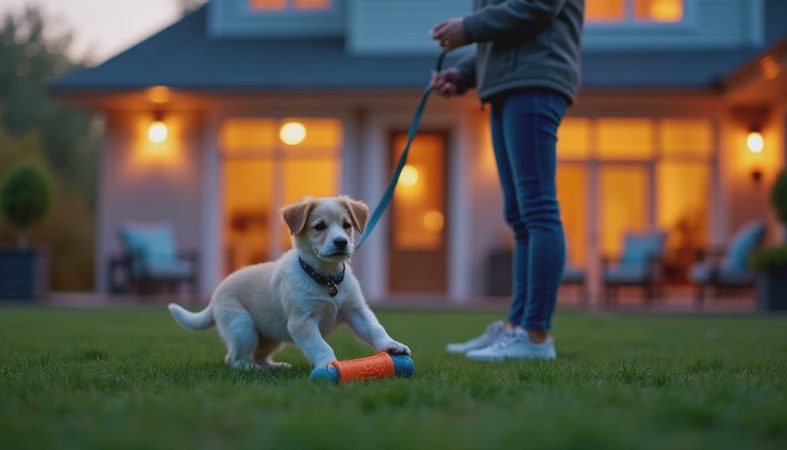
Think of each cue as a contract. You say the word once, your dog offers the behavior, and something worthwhile follows. The reward might be a pea-sized piece of chicken, a game with a fleece tug, permission to sniff a tree, or the opening of the backyard door. Food is convenient, but it is not the only reinforcer.
Keep training sessions short enough that your dog can succeed. Five repetitions during a coffee break will usually accomplish more than a twenty-minute drill after your dog is exhausted. If your dog stops taking treats, scans the room, licks their lips, or moves away, treat that as information. The environment is too difficult, the reward is too small, or the session has gone on too long.
The first four cues to teach
Start with a marker such as “yes” or a clicker. Say the marker the instant your dog does the behavior, then deliver the reward. Timing is the part I underestimated. With Ziggy, my late marker accidentally rewarded looking at the refrigerator instead of looking at me. Dogs learn from the moment the consequence arrives, so practice your timing without a dog first: say “yes,” then touch a treat to your palm.
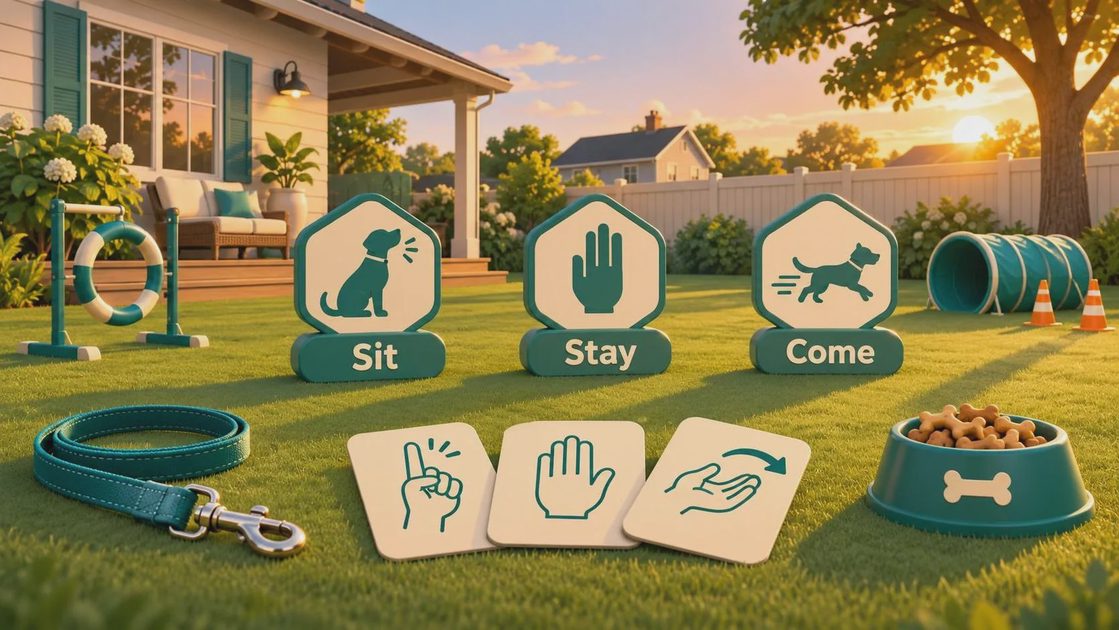
For “name,” say your dog’s name in a calm voice and reward an orientation toward you. This is attention, not a command to stare for a long time. For “touch,” present an open palm a few inches away. When your dog’s nose meets it, mark and reward. Touch is wonderfully useful for guiding a dog without grabbing their collar.
For “sit,” wait for a natural sit or lure the nose gently upward with a treat. Mark as the bottom reaches the floor, then reward. Once the behavior is predictable, add the word immediately before the movement. For “come,” begin indoors from one or two steps away. Use a bright voice, open your arms, and reward generously when your dog reaches you. Never call your dog to punish, end every enjoyable activity, or force them into something scary.
How to practice basic dog commands in real life
A cue learned in a quiet kitchen is not automatically learned at a busy park. Dogs do not generalize as neatly as humans do. Change one variable at a time: distance, duration, distraction, or location. If your dog can respond to “come” in the hallway, try the living room, then a fenced yard, then a quiet outdoor area with a long line. Do not jump from hallway to farmers market and call the confusion stubbornness.
Use a simple traffic-light system. Green means your dog eats, plays, explores, and responds easily. Yellow means they hesitate, look away, or need several prompts. Red means they are over threshold, barking, freezing, lunging, or unable to take food. Train in green, reduce difficulty in yellow, and stop asking for obedience in red. In that moment, create distance and help your dog feel safe.
A useful practice loop is cue, behavior, marker, reward, release. The release word, such as “free,” tells your dog when the exercise is finished. Without it, a dog may guess that sitting means they must remain still forever. Clear endings make training less frustrating for both of you.

Troubleshooting common training snags
If your dog ignores a cue, first check the setup rather than repeating the word louder. Did you use the cue before the behavior was understood? Is the floor slippery? Is a visitor waving a toy? Is your dog worried about the person standing over them? Repeating “sit, sit, sit” can teach a dog that the first request is optional, so reset quietly and make the next attempt easier.
If your dog jumps, reward the behavior you want during greetings: four paws on the floor, a hand target, or a brief pause beside you. Ask visitors to avoid pushing, kneeing, or scolding. Those reactions can add excitement and attention. If your dog guards food or toys, do not practice “drop” by taking possessions away. Trade from a safe distance and consult a qualified behavior professional if there is stiffening, growling, snapping, or a bite history.
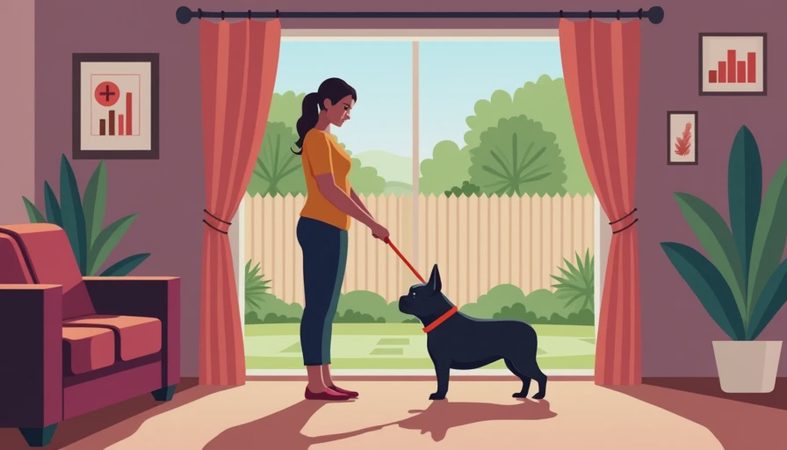
For dogs with significant fear or reactivity, basic dog commands should never replace behavior support. Management comes first: use gates, distance, secure equipment, and predictable routines. Talk with your veterinarian about whether medical factors or anti-anxiety medication might be appropriate, and seek an IAABC consultant or a veterinary behaviorist for a tailored plan.
A realistic weekly training plan
Monday can be name and touch during ten easy repetitions. Tuesday can be sit before meals, with the bowl delivered as the reward. Wednesday can be recall games between two people in a hallway. Thursday can be leash-clipping practice paired with treats. Friday can be “leave it” with a boring object and a better reward in your hand. On the weekend, repeat one familiar cue in a new, quiet location.
Log three details: the cue, the environment, and your dog’s response. A note such as “come, backyard, responded four of five times while birds were quiet” is more useful than “training went badly.” Look for trends across weeks, not dramatic overnight changes. Maple became reliable because we built hundreds of easy repetitions; Ziggy needed more distance, more food, and far less pride from me.
The goal of basic dog commands is not a perfectly obedient dog. It is a dog who understands how to succeed and a guardian who notices when the task needs adjusting. Teach kindly, reward clearly, protect your dog from situations they cannot yet handle, and let trust do some of the heavy lifting. Respect the dog.

Talkback
0