
I had a plan.
Spreadsheet tabs for feeding schedule, potty intervals, crate introduction, first walk route, and a carefully staged meet-and-greet with Maple. I had bought the “right” toys, the “calming” pheromone diffuser, and a camera so I could watch him settle. I told Ethan we would keep the first weekend quiet and structured. I was a product manager. I knew how to launch things.
Ziggy arrived on a Friday afternoon. By Sunday night the plan was scrap paper and I was sitting on the kitchen floor wondering what I had done.
The unvarnished version of those first 48 hours
Not the polished origin story. The actual sequence of decisions that made a hard situation harder, and the clearer picture that eventually emerged.

Hour 0–6: The Over-Welcome
Ziggy came out of the carrier already vibrating. Medium terrier mix, roughly 25 pounds, eyes scanning every corner of the entryway. The rescue had described him as “a little anxious but sweet once he settles.” I heard the second half of that sentence and ignored the first.
I let him explore the whole first floor immediately. I thought freedom would help him feel at home. Instead he paced the perimeter in tight loops, pausing only to lip-lick and freeze when Maple appeared in the hallway. Maple, to her credit, gave a soft look and walked away. Ziggy did not know how to interpret that yet.
I offered food. He took one piece and dropped it. I offered a stuffed Kong. He ignored it. I clipped on the leash for a short potty break and he spent most of the time trying to climb my legs.
What I missed: he was already over threshold. New house, new smells, new dog, new humans, car ride still in his system. The appropriate response was less, not more. A single quiet room, limited choices, time to let the nervous system come down. I gave him the full environment on day one because I wanted him to feel included. Inclusion without capacity is just more noise.
Night 1: The Crate Experiment That Wasn’t Ready
I had read that crates create a den-like sense of safety. I set one up in the bedroom with a soft bed and a familiar-smelling blanket from the foster. At bedtime I guided Ziggy in with a trail of treats. He went in. I closed the door. He lasted four minutes.
The vocalization started low and built. Not demand barking. The kind of sound that makes your chest tighten. I let him out, tried again, same result. By 1 a.m. the crate was pushed into the closet and Ziggy was on a bed on the floor next to ours, still not sleeping, still scanning.
I felt like I had already failed the “independence” test. In reality I had asked a dog in a completely novel environment to accept confinement before he had any evidence that the new place was safe. Timing matters more than the tool. A crate can be useful later. On night one, for this dog, it was another layer of pressure.
Maple slept through most of it. Occasionally she lifted her head, looked at the new dog, and put her head back down as if to say the situation was not her problem to solve.
Day 2: The Optimization Spiral
Saturday I doubled down on structure. Timed potty breaks. Short training sessions to “build engagement.” A carefully measured walk around the block so he could “see the neighborhood.” I invited a quiet friend over for a calm hello because I wanted Ziggy to start building a positive association with visitors early.
Each of those decisions looked reasonable in isolation. Stacked on top of residual stress from the day before, they kept him in the yellow-to-red zone for most of the day. He startedle at ordinary sounds. He could not take food in the presence of the visitor. On the walk he alternated between shutting down and sudden lunges at leaves moving across the sidewalk.
I kept adjusting the plan in real time—shorter sessions, higher-value food, more distance—still trying to make the original schedule work. What I should have done was throw the schedule out. The dog in front of me needed decompression, not enrichment and socialization on day two.
By Saturday evening the camera showed a dog who could not settle even when the house was quiet. Pacing, panting, occasional whining at the door. I sat on the kitchen floor with a glass of water and cried. Ethan sat with me. Maple came over, rested her head on my knee for a moment, then left again.
That was the low point. It was also the first moment I stopped trying to optimize and started trying to see.
What I Would Do Differently
If I could reset those 48 hours I would do almost the opposite of what I did.
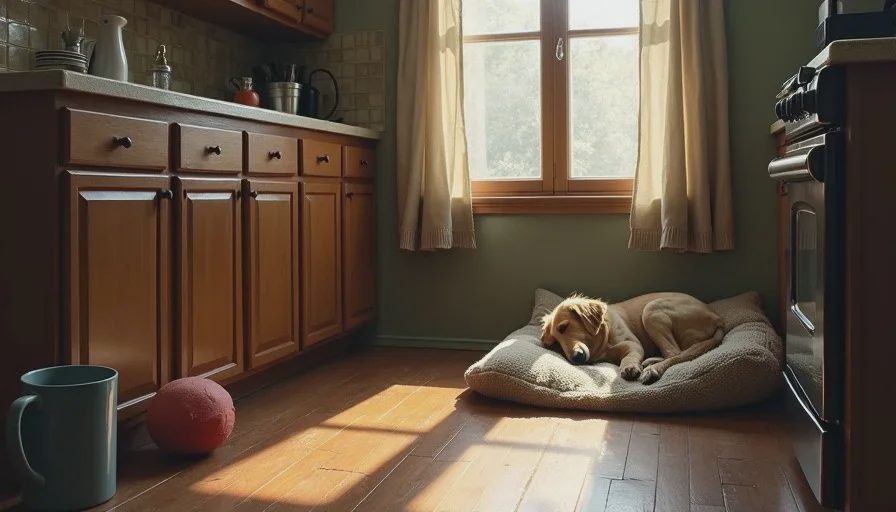
One quiet room for the first day and night. Soft bedding, water, a few safe chew options, and no requirement to interact. Let the dog choose when to approach. Keep Maple’s introductions brief and parallel rather than face-to-face. Skip the neighborhood tour. Skip the visitor. Skip the training sessions. Protect sleep. Watch body language more than the clock.
The goal in the first two days is not bonding, obedience, or “showing them the house.” The goal is to stop adding stress so the nervous system has a chance to come down. Everything else—crate training, leash manners, guest protocols, multi-dog routines—works better once the dog is actually available to learn.
I still see versions of my early mistakes in the stories clients tell me. The well-intentioned full-house tour. The immediate crate. The desire to socialize quickly so the dog “gets used to everything.” Most of it comes from care. The correction is usually the same: slow down, reduce the variables, and let the dog’s recovery set the pace instead of the calendar.
Ziggy did settle. Not in 48 hours. Not in a week. The real progress started when I stopped treating the first weekend like a product launch and started treating it like the arrival of a frightened animal who needed time more than structure.
The couch cushions still paid a price later. But the first 48 hours taught me the more important lesson: when a new dog is struggling, the kindest thing is often to do less.
Respect the dog.