
Ziggy was under the picnic table, shaking so hard that his tags clicked against his water bowl. We were at a Texas campground, and I had imagined a peaceful weekend of creek walks and campfire naps. Instead, every rustling leaf looked like a crisis to my anxious terrier mix. These tips for camping with dogs come from that trip, the research I did afterward, and several less dramatic attempts with Ziggy and Maple. The goal is not a perfectly obedient camping dog. It is a dog who feels safe enough to rest, explore, and communicate.
Start with the dog you actually have
The best tips for camping with dogs begin before you reserve a campsite. Consider your dog’s baseline. Can they settle on a mat while people walk past? Do they recover within a few minutes after hearing a loud noise? Can they eat, drink, and take treats in a moderately unfamiliar place? These questions matter more than whether your dog knows a dozen tricks.
A dog who is fearful of strangers, reactive on leash, or distressed by separation may find a busy campground overwhelming. That does not mean camping is permanently off the table. It means you should build smaller experiences first. Try a quiet afternoon at a friend’s backyard, a short picnic near home, or one night in a familiar tent in your own yard. Watch recovery, not just the initial reaction. A dog who startles at a noise but soon sniffs, eats, and lies down is giving you different information from a dog who remains tense for hours.
Pack a familiar bed, blanket, food, and chew. Familiar scent can reduce the number of new variables your dog must process. Avoid introducing a new harness, food, or crate on the same trip. I once brought a new collapsible bowl because it looked clever online; Ziggy refused to drink from it and then tried to drink out of my coffee mug. The coffee lost.

Choose the campsite for decompression
Location does a lot of the behavioral work. A site at the end of a loop is often easier than one beside the restroom, playground, dump station, or campground entrance. Check whether dogs are allowed on nearby trails, whether quiet hours are enforced, and whether the site has shade. Never assume a dog-friendly campground is automatically comfortable for every dog.
For a first trip, choose a shorter drive and a site with room between neighboring tents. A six-hour drive followed by unfamiliar smells, barking dogs, generators, and nighttime wildlife is a large behavioral experiment. A ninety-minute drive to a quiet site gives you more useful information and an easier exit if your dog cannot settle.
Keep your dog on leash unless you are inside a secure, legal enclosure. A long line can offer controlled sniffing space, but attach it to a well-fitted harness rather than allowing it to drag near trees or picnic tables. Retractable leashes are difficult to manage around other campers and can create sudden tension. Bring identification, a current rabies tag, a microchip registration check, and a recent photo stored on your phone.
Build a predictable camp routine
Predictability is one of the most practical tips for camping with dogs. Feed at roughly the usual times. Offer water after walks and during warm weather, but do not force a tired dog to keep moving. Plan activity, then schedule quiet recovery in the tent or vehicle with ventilation and temperature monitored carefully. A dog who appears excited may actually be accumulating stress.
Use a simple traffic-light check. Green looks like loose muscles, normal appetite, sniffing, soft eyes, and the ability to respond to their name. Yellow includes repeated scanning, panting unrelated to heat, lip licking, hiding, sudden pulling, or refusing familiar treats. Red can look like frantic escape attempts, snapping, prolonged freezing, vomiting, or inability to settle. In yellow, increase distance and reduce stimulation. In red, stop the activity and move to a quieter, cooler place. This is information, not disobedience.
A mat or portable bed can become a visual cue for rest. At home, reward your dog for stepping onto it, lying down, and remaining there while ordinary camp sounds play quietly in the background. At the campsite, place it away from the fire, foot traffic, and food preparation. Give chews only if your dog can enjoy them without guarding from people or other dogs.
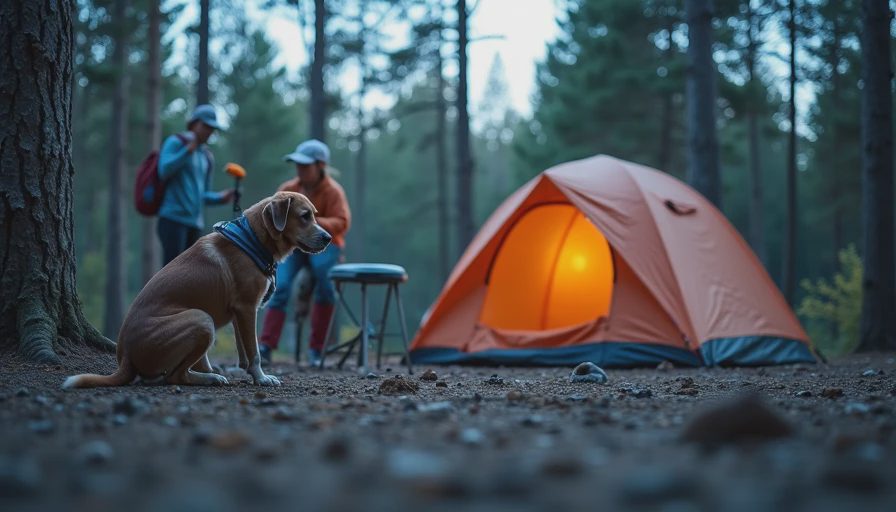
Manage wildlife, food, and nighttime surprises
Camping adds tempting smells and unpredictable animals. Store dog food, treats, and dirty dishes according to campground rules, usually in a sealed container or approved food locker. Do not leave a bowl full of food outside overnight. Keep your dog close when walking near brush, water, or tall grass, and use a flashlight after dark. A leash does not replace supervision.
Practice a cheerful “let’s go” cue before the trip. Say it, move away from the distraction, and reward your dog when they follow. This is more useful than repeatedly shouting a recall while your dog is already chasing a squirrel. Carry high-value treats in a pouch, but use them to create distance rather than luring your dog toward a frightening animal or person.
Bring a canine first-aid kit with gauze, saline for rinsing minor debris, tweezers, disposable gloves, a digital thermometer, and your veterinarian’s contact information. Do not apply human pain medication or attempt to diagnose a bite, heat illness, or allergic reaction yourself. Call a veterinarian or emergency clinic for guidance when symptoms are serious or persistent.
Plan for the part that goes wrong
The most honest tips for camping with dogs include an exit plan. Know the nearest town, veterinary hospital, fuel station, and place where you can safely cool down. Pack more food and water than the itinerary seems to require, plus towels, waste bags, backup leashes, and a spare car restraint. If your dog stops eating, cannot sleep, or stays in a yellow or red stress state, shortening the trip is a successful decision, not a failure.
For a dog with severe noise sensitivity, separation distress, or a history of escape behavior, talk with your veterinarian before camping. Ask whether a health evaluation or anti-anxiety medication might be appropriate; never borrow medication from another animal. A qualified behavior consultant can also help you make a gradual exposure plan that respects the dog’s threshold.
A calmer camping checklist
Before leaving, test every piece of equipment at home. Confirm the harness fits, the leash clips securely, the tent has enough room for your dog to turn around, and your dog can settle while you unzip and rezip the door. Record a short video of your dog resting in the setup so you can compare their body language later.
At camp, give your dog time to sniff without immediately demanding a hike. Protect sleep. Keep greetings optional. Ask strangers not to approach, and step away from dogs who are staring, pulling, or barking. If your dog guards food or space, feed behind a barrier and do not invite visitors into the tent.
The most useful tips for camping with dogs are really tips for listening. Maple needs little more than a shaded bed and a slow morning walk. Ziggy needs distance, routine, and permission to opt out. Neither dog is doing camping incorrectly. Their needs are different, and my job is to notice before discomfort becomes panic. Respect the dog, pack for the individual in front of you, and let a quiet, uneventful trip count as a very good one.