Maple stood beside her empty bowl, looking personally betrayed by the kibble I had just bought. She was not being difficult. Her coat was dull, her stool was inconsistent, and I had chosen the food because the bag looked reassuring. That experience taught me that finding the best dog food for golden retriever health is less about clever packaging and more about matching nutrition to the individual dog in front of you.
Golden Retrievers are active, food-motivated dogs with real risks around weight gain, joint strain, skin problems, and digestive upset. The best dog food for golden retriever needs to provide complete nutrition without turning every meal into an accidental calorie surplus. Your veterinarian should be part of the decision if your dog has persistent itching, diarrhea, vomiting, unusual thirst, or a sudden change in appetite.
What Golden Retrievers need from a daily diet
Start with the nutritional adequacy statement on the package. In the United States, look for food labeled complete and balanced for your dog's life stage under Association of American Feed Control Officials, or AAFCO, standards. A food intended for adult maintenance is not automatically appropriate for a puppy, and a puppy formula is not necessarily ideal for an older dog.
Protein supports muscle maintenance, but a long ingredient list does not prove better quality. Chicken, turkey, beef, fish, and lamb can all appear in sensible formulas. Dogs also need fats, digestible carbohydrates, vitamins, minerals, and water. Omega-3 fatty acids from fish oil can support skin and coat health, although they are not a cure for allergies or inflammation.
The best dog food for golden retriever puppies should be designed for growth of large-breed dogs. Controlled calcium and phosphorus levels matter because rapid, poorly balanced growth can place stress on developing bones. Ask your veterinarian when to transition from puppy food; many Goldens remain on growth formulas until roughly 12 to 18 months, depending on their size and development.
How to compare food labels without getting lost
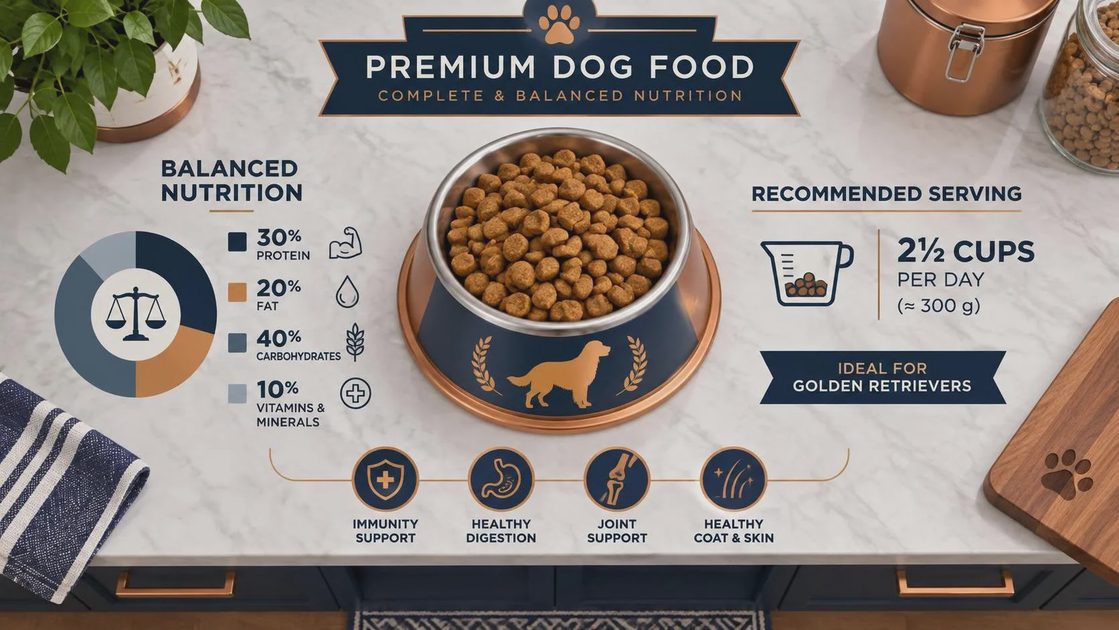
I used to read labels as if I were preparing for a chemistry exam, then bought whichever bag had the happiest dog on the front. A simpler process works better. First, confirm the life-stage statement. Second, check calories per cup or can. Third, look for a company that can explain who formulates the diet, where it is produced, and what quality-control testing it performs.
Brands such as Purina Pro Plan, Hill's Science Diet, Royal Canin, and Iams offer established product lines with formulas for puppies, adults, seniors, and specific body-size needs. That does not mean every recipe suits every dog. It means these companies generally provide more complete feeding and manufacturing information than a marketing label alone.
Be cautious with dramatic claims such as ancestral, detox, or ingredient-free. Grain-free food is not automatically healthier, and avoiding grains without a diagnosed reason can unnecessarily narrow your options. The FDA has investigated reports of diet-associated canine dilated cardiomyopathy involving some diets, particularly those with high proportions of peas, lentils, other legumes, or potatoes. Discuss any major diet change with your veterinarian rather than relying on internet certainty.
Choosing food for weight, joints, and sensitive stomachs
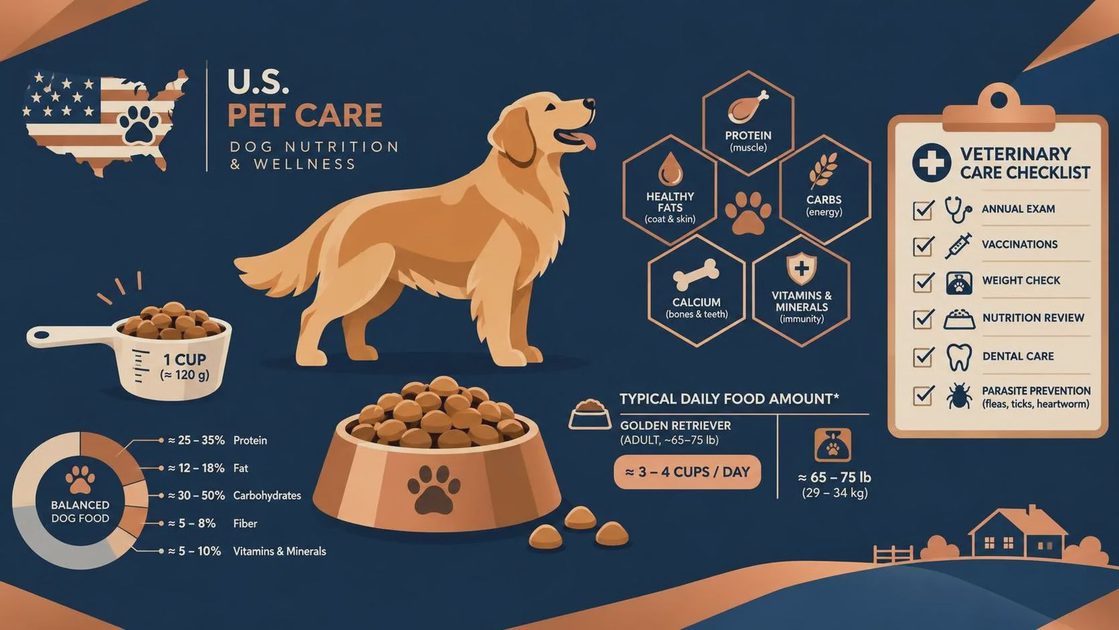
Golden Retrievers are famous for acting as if they have never eaten, even seconds after dinner. That appetite can make body condition more useful than the feeding chart printed on the bag. You should be able to feel the ribs under a thin layer of fat, see a waist from above, and notice an abdominal tuck from the side. If ribs are difficult to feel, ask your veterinarian for a calorie target.
A 70-pound Golden may need a very different amount of food from another 70-pound Golden because age, activity, neuter status, metabolism, and health all matter. Measure meals with a standard cup or, better yet, a kitchen scale. Treats, dental chews, peanut butter, and table scraps count toward daily calories. Keeping extras near 10 percent of daily intake is a useful general guideline, not a substitute for professional advice.
For joint support, maintaining a lean body is often more valuable than buying an expensive supplement. A diet with appropriate calories and essential nutrients can support normal mobility, while a veterinarian can advise whether an omega-3 or other supplement makes sense. For loose stool or chronic itching, do not keep switching foods every few days. That makes the pattern harder to interpret and can upset digestion further.
A practical transition plan
Once you select the best dog food for golden retriever needs, change gradually over about seven days. On days one and two, use roughly 25 percent new food and 75 percent old food. Move to an even split for the next two days, then use 75 percent new food and 25 percent old food before serving only the new diet. A sensitive dog may need a longer transition.
Track three things in a notebook: meal amount, stool quality, and signs such as scratching, ear odor, gas, or reduced appetite. This is not busywork. When Ziggy had a stomach flare after stealing half a loaf of sourdough, my notes helped separate a one-time kitchen crime from a food pattern. If your dog develops repeated vomiting, bloody stool, marked lethargy, facial swelling, or breathing difficulty, contact a veterinarian promptly.
Do not use a food trial to diagnose a medical problem on your own. A true elimination diet requires strict control of ingredients and treats, usually with veterinary guidance. Even one flavored chew can interfere with the result.
A short shopping checklist
Before placing a bag in your cart, ask these questions:
- Is the food complete and balanced for my dog's current life stage?
- Does it provide clear calorie information per cup, can, or serving?
- Can the manufacturer explain its nutritionists, testing, and quality controls?
- Does the formula fit my dog's health needs rather than a social-media trend?
- Can I measure the daily portion consistently?
- Do I have a plan for treats and food puzzles?
- Will my veterinarian review the choice if my dog has ongoing symptoms?
The best dog food for golden retriever is the one your dog digests well, maintains a healthy body condition on, and receives in a measured amount. A premium price does not guarantee that outcome, and a familiar brand is not a replacement for observing your dog.
The kindest answer is individual
Maple eventually did well on a straightforward adult formula, smaller measured portions, and fewer mystery snacks from my baking experiments. The change was not glamorous. There was no dramatic before-and-after advertisement, just firmer stools, a brighter coat, and a waist I could actually see.
Choosing the best dog food for golden retriever health is an ongoing process, not a one-time verdict. Reassess the diet when your dog changes life stage, activity level, body condition, or medical status. Read the label, measure the meal, document what you notice, and bring useful observations to your veterinarian. Respect the dog.


Talkback
0