Ziggy was under the dining table, shaking, while I stared at a bag of grain-free dog food and wondered whether I had made his life better or simply bought the most persuasive packaging in the pet aisle. If you have rescued a dog with allergies, an unreliable stomach, or a long list of food dislikes, you may be asking the same question: is removing grains genuinely helpful, or is it just clever marketing?
The honest answer is less dramatic. Grain-free dog food can be appropriate for some dogs, but grains are not automatically harmful, and a grain-free label does not prove a recipe is more nutritious. Your dog’s individual health history, the complete formula, and your veterinarian’s guidance matter far more than the front of the bag.
What “grain-free” really means
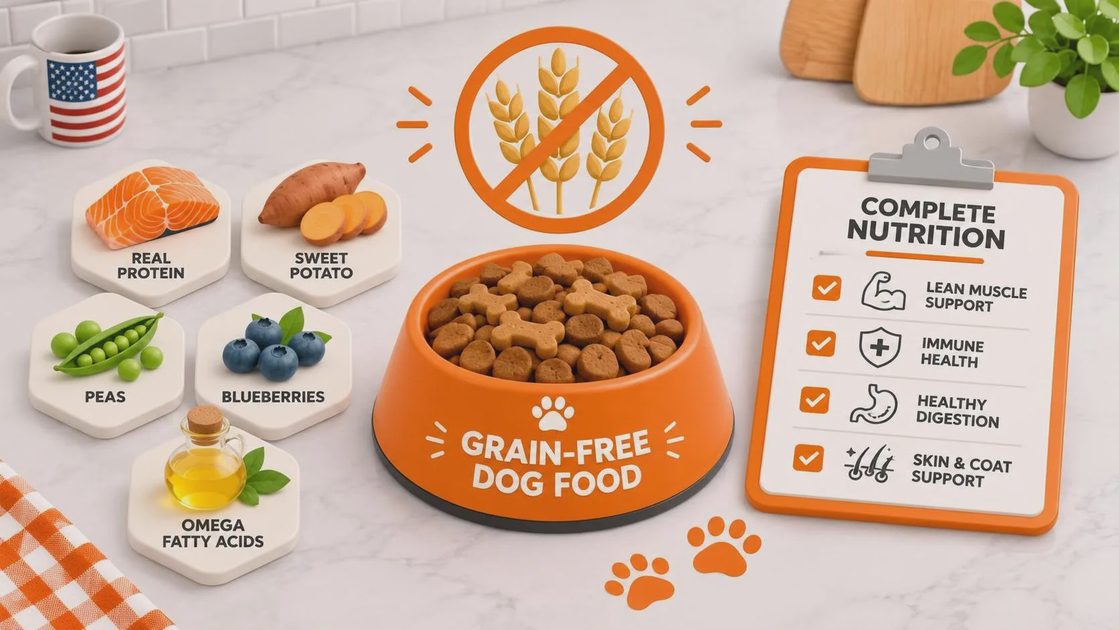
Grain-free dog food contains no wheat, corn, rice, barley, oats, or other cereal grains. That does not mean it is carbohydrate-free. Manufacturers commonly replace grains with peas, lentils, chickpeas, potatoes, tapioca, or sweet potatoes. Some recipes use several of these ingredients at once.
This distinction matters because “grain-free” and “low-carb” are not interchangeable. A recipe can exclude rice and corn while still containing substantial carbohydrates from legumes and potatoes. Likewise, the absence of grains says nothing by itself about protein quality, calorie density, fiber, or whether the food meets your dog’s nutritional needs.
Dogs also digest properly cooked grains quite well in most circumstances. Veterinary nutritionists generally consider ingredients such as rice, oats, and barley useful sources of energy, fiber, vitamins, and minerals when included in a balanced diet. Maple, my older retriever mix, has eaten food containing grains for years without turning into a dietary cautionary tale. She is still dignified, gray-muzzled, and extremely interested in toast crumbs.

Does your dog need grain-free dog food?
A true grain allergy is possible, but it is not the first explanation for every itchy paw, ear infection, loose stool, or red belly. Environmental allergies, fleas, contact irritation, and other medical conditions can create similar signs. A dog may also react to a specific animal protein rather than to grains.
The reliable way to investigate a suspected food allergy is a veterinarian-directed elimination diet. Typically, the dog eats a carefully selected novel-protein or hydrolyzed-protein diet for a defined period, with no random treats, flavored supplements, table scraps, or chewable medications that could muddy the results. If symptoms improve, the veterinarian may recommend a controlled challenge to identify the trigger.
That process is frustratingly unglamorous. I once tracked Ziggy’s treats with the confidence of a product manager and then discovered someone had been handing him tiny bites of cheese during a weekend visit. The spreadsheet was beautiful. The experiment was useless. If your veterinarian suspects food-related disease, consistency matters more than a trendy ingredient list.
Do not start a restrictive diet solely because a social media post calls grains inflammatory. Ask what symptom you are trying to change, what evidence would show improvement, and how nutritional adequacy will be protected during the trial.
The heart-health question owners should know
The FDA has investigated reports of canine dilated cardiomyopathy, or DCM, in dogs eating certain diets that were labeled grain-free and often contained high proportions of peas, lentils, other legumes, or potatoes. The investigation did not establish that every grain-free recipe causes DCM, and it did not mean every reported case had the same cause. It did create a serious reason to discuss diet composition with a veterinarian instead of assuming “natural” equals safe.
This is especially important if your dog has a heart murmur, reduced stamina, coughing, fainting, or a family history of heart disease. Those signs need veterinary attention regardless of the food in the bowl. A behavior consultant cannot diagnose heart disease, and neither can a bag label. Talk with your veterinarian before making a major diet change, particularly for puppies, pregnant dogs, seniors, or dogs with an existing medical condition.
The practical takeaway is not panic. It is curiosity. Ask who formulated the recipe, whether the company employs a qualified nutritionist, what quality-control testing it performs, and whether the product has undergone feeding trials or is supported by appropriate nutritional analysis.
How to compare dog food labels without getting lost
Marketing language is designed to make you feel something quickly: ancestral, clean, wild, simple. The guaranteed analysis and adequacy statement are more useful, even if they are considerably less exciting.
Use this five-step check when comparing grain-free dog food with another complete diet:
- Confirm the food is labeled complete and balanced for your dog’s life stage under AAFCO nutritional profiles.
- Check calories per cup or can, because feeding instructions are only a starting point and calorie density varies widely.
- Look for a clear manufacturer contact, lot information, and transparent quality-control practices.
- Ask whether a qualified veterinary nutritionist or animal nutritionist helps formulate and review the diet.
- Compare the main protein sources and replacement carbohydrates rather than judging the recipe by one heroic-sounding ingredient.
Ingredient lists have limitations. Ingredients appear by weight before cooking, so a fresh ingredient can rank highly because it contains water. The list still offers useful clues, but it should not replace the adequacy statement or a conversation with your veterinarian.
Switching foods without creating a second problem
A sudden change can cause vomiting, diarrhea, food refusal, or a very unpleasant morning on your carpet. Unless your veterinarian gives different instructions, transition gradually over about seven days. Start with roughly 25 percent new food and 75 percent current food, then move toward an even split, followed by 75 percent new food and finally the full new diet. Slow down if stools soften.
Measure portions rather than pouring by memory. A measuring cup is better than a generous scoop, and a kitchen scale is more precise for small dogs. Keep treats within the daily calorie plan, especially during a diet trial. A single bully stick, dental chew, or flavored pill can complicate your conclusions.
Watch appetite, stool quality, scratching, ear discomfort, energy, and body weight. Write observations in plain language. “Scratched twice after dinner” is more useful than “seems itchy.” If your dog develops repeated vomiting, severe diarrhea, weakness, breathing trouble, collapse, or refuses food, contact a veterinarian promptly.
A calmer decision for you and your dog
Grain-free dog food is not a moral choice, and feeding a food with grains is not a failure. The right diet is the one that is nutritionally complete, tolerated by your individual dog, appropriate for their life stage, and chosen with enough evidence to justify the change. Sometimes that will be grain-free dog food. Sometimes it will be a conventional recipe with rice or oats. Neither answer earns virtue points.
Before buying another bag, write down the actual goal: fewer ear infections, better stool, a controlled allergy trial, improved weight, or simply a different flavor. Bring the current diet, treats, supplements, and symptoms to your veterinarian. If the goal is behavior, remember that discomfort can affect sleep, patience, and reactivity, but food alone is rarely a complete behavior plan.
Ziggy’s best progress came from boring consistency: measured meals, veterinary guidance, careful notes, and a plan that respected what he was communicating. Food is one piece of caring for a dog who is trying to cope in a human world. Choose that piece thoughtfully, and keep the whole dog in view. Respect the dog.



Talkback
0