The doorbell is one of the most common trigger points I see.
It is sudden. It is loud. It reliably predicts that someone is about to enter the dog’s space. For many dogs the emotional response is instant high arousal—barking, rushing the door, spinning, or escalating into barrier frustration. Once that pattern is rehearsed enough times, the sound itself becomes enough to set the whole sequence off.
The protocol below is the one I use with clients and the one I eventually applied at home. It is deliberately ordered: change the feeling first, then teach an alternative behavior, then add real-world difficulty. Skipping the emotional work and jumping straight to “go to place” usually produces a dog who can hold a sit until the doorbell rings and then falls apart.
the protocol I eventually applied at home
Step 1: Management While You Train
You cannot train effectively if the dog is rehearsing the full reactive display multiple times a day. Management is not avoidance; it is what makes learning possible.
Disconnect the doorbell or cover the button temporarily if deliveries and visitors are frequent.
Use a visual cue on the door for household members so they knock in a pattern the dog does not yet know, or simply walk in if safe.
Keep a high-value treat stash near the door for real-life surprises you cannot prevent.
If the dog already rushes, use a baby gate or leash to prevent full-speed door charging while you work the protocol.
Management reduces the number of times the old pattern gets practiced. That alone often lowers the intensity.
Step 2: Change the Meaning of the Sound
Before asking for a behavior, make the doorbell predict good things.
Record your actual doorbell sound (or use a consistent recording of it). Start at a volume so low that your dog notices but does not bark or rush. This may be quieter than you expect.
When the soft sound plays, the bar opens: deliver a rapid series of small, high-value treats. When the sound stops, the bar closes. Repeat in short sessions. You are not asking the dog to sit or go anywhere. You are only pairing.
Watch for the shift. The dog hears the soft ding and looks toward you or the treat area with expectation. That conditioned emotional response tells you the prediction is updating. Only then do you raise the volume in small steps, re-establishing the positive association at each new level.
If at any point the dog barks, lunges toward the door, or stops taking food, you have moved up too quickly. Drop the volume and rebuild.
This stage can take days or weeks depending on how long the reactive pattern has been rehearsed and how sensitive the individual dog is. There is no prize for speed.
Step 3: Teach a Station Behavior Away From the Door
While the sound work is underway, teach a solid “go to mat” or “settle on bed” in a quiet context with no doorbell involved.
Choose a location with enough distance from the door that the dog can still succeed when arousal rises later. For many households this is a mat in the living room or kitchen doorway—close enough to see the entry, far enough to reduce the magnet pull of the door itself.
Build duration and distance gradually with food reinforcement. Add a release cue so the dog learns the station has a clear end. Practice until the dog can go to the mat on cue and stay there for a reasonable period while ordinary household movement happens.
Do not combine the mat with the doorbell yet. Make the behavior easy and well-paid first.
Step 4: Combine Sound and Station
Now bring the pieces together at low difficulty.
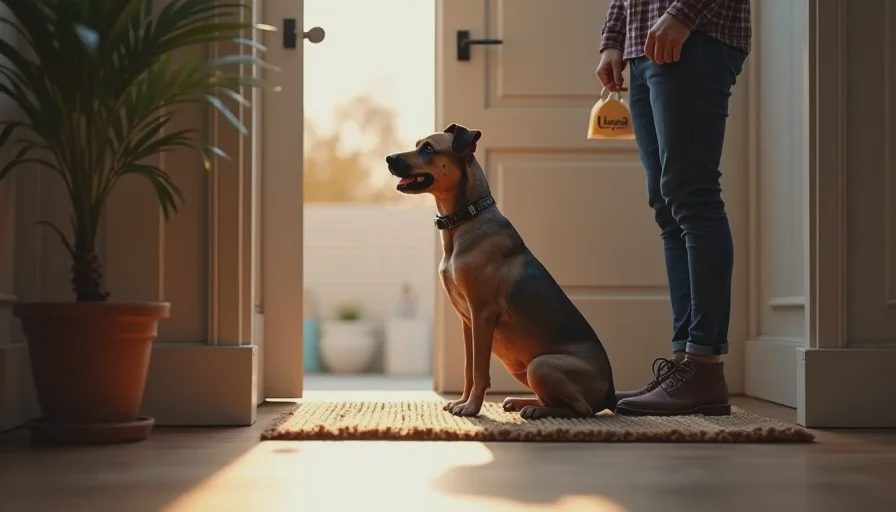
Play the doorbell recording at a volume the dog can already handle emotionally. Cue the mat (or simply wait for the dog to offer it if that pattern is strong). Deliver food on the mat while the sound is present. When the sound ends, continue to reinforce settled behavior for a few more seconds, then release.
Increase difficulty one variable at a time: slightly louder sound, slightly longer duration, mild movement near the door, a family member stepping outside and ringing the real doorbell while you support the dog at the mat.
Real visitors come last. When you do add them, coach the human: no excited greetings, no leaning over the dog, no forcing interaction. The dog remains on the mat, paid well, until you release after the initial entry excitement has dropped.
Step 5: Real-Life Maintenance
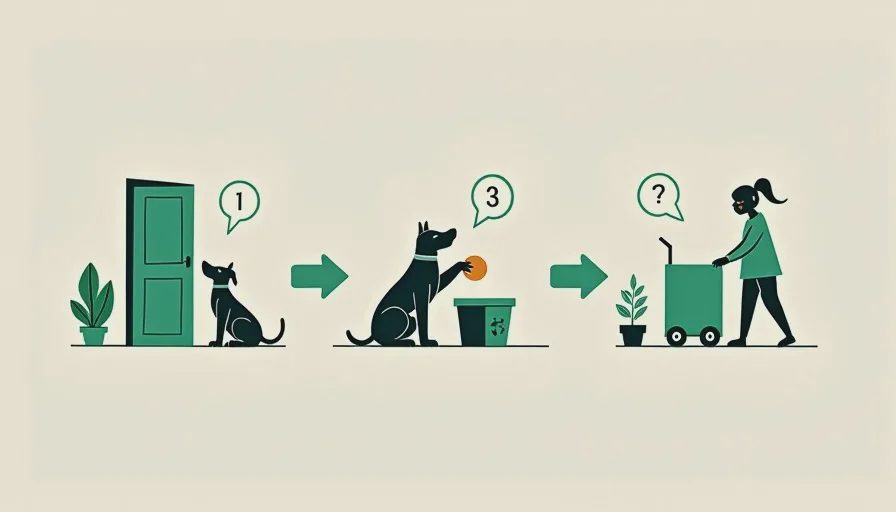
Even after the protocol is working, the doorbell remains a high-arousal cue for many dogs. Keep treating occasionally for real rings. If the dog has a hard day or you know visitors will be chaotic, return to stronger management. Progress is not erased by a single hard event, but repeated unmanaged rehearsals can erode it.
Track the work simply:
Date | Volume / type of ring | Distance to mat | Dog’s response | Food taken? | Next adjustment |
|---|---|---|---|---|---|
Patterns become obvious. So do the days you asked for too much.
What This Protocol Does Not Include
It does not use startle, scolding, or any tool that adds fear to an already aroused moment. It does not require the dog to be silent before receiving food in the early stages—the emotional shift comes first. It does not promise that every dog will greet visitors with perfect calm after two weeks. Some dogs will always do better with a management plan that keeps them farther from the door during entries. That is a valid outcome.
Ziggy’s doorbell manners improved once I stopped treating the bark as the main problem and started treating the underlying arousal as the thing that needed changing. The mat work gave him somewhere to put himself. The sound pairing made the ding less of an emergency. The combination is what held up when real people arrived.
You can adapt the same structure to knocking, gate bells, or intercoms. The principles stay constant: protect the dog from constant rehearsal, change the emotional prediction, teach a clear alternative, then raise difficulty only as the dog remains successful.
Respect the dog.