Ziggy was under the dining table, shaking so hard his tags clicked against the floor. I had asked him to come out, then asked again, then tried a cheerful voice that sounded increasingly fake. I thought I was helping. I was actually missing the message. Learning dog body language gave me a better question: what is Ziggy experiencing right now, and what would make the next moment easier?
Dogs communicate with posture, movement, facial expression, breathing, and distance. One signal rarely tells the whole story. A wagging tail is not automatically happiness, and a growl is not proof that a dog is aggressive. Context matters. Respect the dog by looking at the entire picture before deciding what a behavior means.
Start with the whole dog, not one body part
The most useful dog body language skill is observation without rushing to label. Look at the ears, eyes, mouth, spine, weight distribution, tail, and movement together. Then note what happened immediately before the change. Did a stranger enter? Did someone reach toward a chew? Did a child run past? Did the dog lose access to a safe hiding place?
A loose body, soft eyes, gently open mouth, and curved movement often suggest comfort. A dog who can sniff, eat, turn away, or choose to leave is giving you valuable information about emotional flexibility. By contrast, a frozen spine, closed mouth, hard stare, lowered head, tucked tail, or sudden stillness deserves space. Stillness is easy to overlook because it does not look dramatic, but it can be a serious request for distance.
Watch for clusters rather than collecting isolated signs. A high tail can reflect excitement, confidence, or tension depending on the rest of the body. Fast tail movement with a rigid torso is different from a broad, relaxed sweep that moves the hips. This is why dog body language cannot be decoded like a simple dictionary.
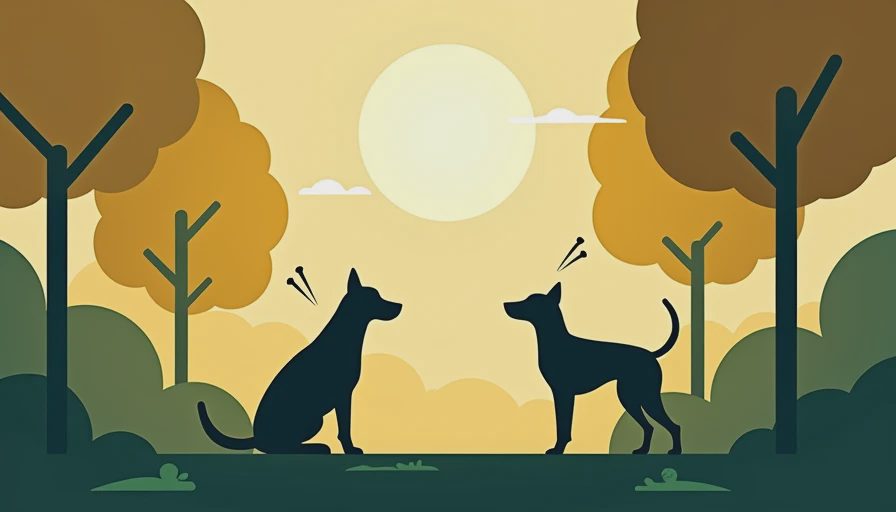
What fear and stress can look like
Stress does not always look like trembling. Some dogs lick their lips, yawn, scratch, sniff the ground, shake off, turn their head, or suddenly investigate a wall. These behaviors can be ordinary, but when they appear in a difficult context, they may function as coping signals. A dog who keeps yawning while a visitor leans over them is not necessarily tired.
The traffic-light framework helps me make decisions. Green means the dog is loose, responsive, and able to take food or disengage. Yellow means the dog is showing early stress signals: slower movement, scanning, lip licking, pinned ears, whale eye, or repeated avoidance. Red means the dog is lunging, snapping, hiding, screaming, freezing, or unable to respond normally. At yellow, increase distance and reduce pressure. At red, stop the interaction and create safety rather than asking for obedience.
I learned this the embarrassing way. At a crowded Austin patio, I kept encouraging Ziggy to sit while he stared at a passing dog. His mouth closed, his weight shifted forward, and his tail became rigid. I called it stubbornness. It was a warning that I had stayed too close for too long. We left, and the walk home was humbling. Good dog body language interpretation would have changed the plan sooner.
Friendly does not always mean comfortable
Many guardians are taught that a dog who approaches is friendly and a dog who growls is dangerous. Real life is more nuanced. A nervous dog may approach because the person is holding food, because escape is blocked, or because approaching feels safer than waiting. A dog may accept petting while remaining tense, then abruptly move away when the pressure continues.
Look for consent signals. A comfortable dog may lean in, return for more contact, keep a soft face, and move freely. A dog who turns the head away, shifts the body away, closes the mouth, licks the lips, or stops returning is asking for a pause. Pet for a few seconds, then stop and see what the dog chooses. Choice is useful information, not a test your dog can pass or fail.
Growling is communication. Punishing it can suppress the warning without changing the fear or conflict underneath. Instead, calmly create distance, manage the environment, and identify the trigger. If there has been a bite, repeated snapping, or intense resource guarding, involve a qualified behavior professional and your veterinarian. Pain and other medical factors can influence behavior, so behavior work should not replace veterinary care.
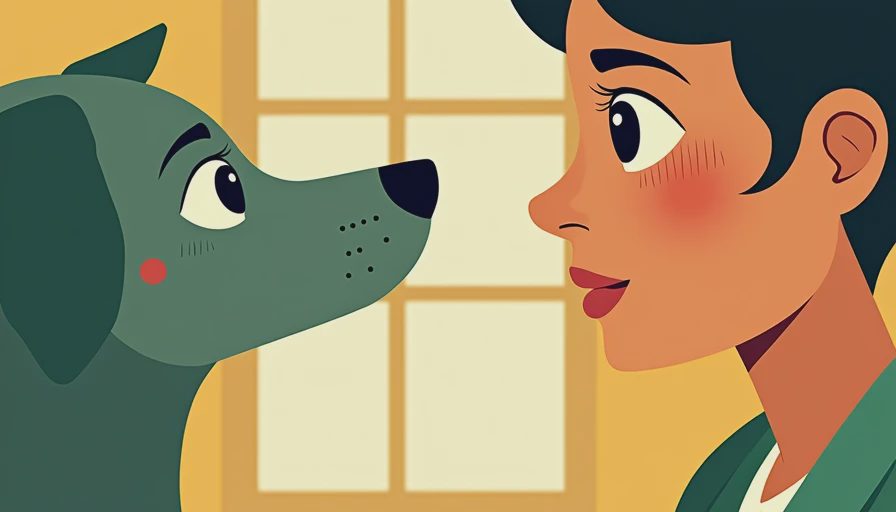
Play signals and over-arousal
The play bow is a familiar example of dog body language: front legs lowered, rear raised, and movement often loose. But a play bow does not guarantee that every dog involved is having fun. Play should include pauses, role reversals, curved approaches, and opportunities to disengage. Healthy partners take breaks and re-enter voluntarily.
Trouble often begins when arousal climbs faster than a dog can regulate. The mouth becomes frantic, movements turn repetitive, recalls disappear, and one dog keeps pursuing while the other tries to escape. Interrupt early with a cheerful scatter of treats, a sniffing break, or a calm walk away. Do not wait for a fight to prove that the interaction was too intense.
At home, watch the difference between relaxed excitement and frantic excitement. Maple can carry a toy around with a soft body and settle after a few seconds. Ziggy may sprint, bark, and bounce off the sofa when he is overtired. Neither dog is being bad. Their nervous systems need different support, and a quiet room or nap can be more useful than another command.
A practical observation worksheet
For one week, record three small details after a challenging moment. First, write the trigger and distance: a dog at twenty feet, a hand near the food bowl, or a visitor entering the room. Second, describe visible behavior without interpretation: ears back, mouth closed, weight shifted, two lip licks, then retreat. Third, record what happened next and whether the dog recovered by eating, sniffing, or resting.
This simple log turns vague impressions into patterns. You might discover that your dog can pass a person on the sidewalk at forty feet but not at fifteen, or that handling is easier after a walk but harder when the dog is tired. Those details give you a starting point for management and gradual training. The goal is not to stare at your dog all day. It is to notice enough early information to make kinder decisions.
Responding without force
When the body says uncomfortable, believe it. Move away, open a gate, remove the competing item safely, or guide the dog toward a familiar resting area. Use treats to build positive associations when the dog can still eat and think. Avoid forcing greetings, cornering a hiding dog, alpha-style corrections, shock collars, and leash pops. These methods can increase fear and make communication less reliable.
For serious anxiety, aggression, or sudden behavior change, start with a veterinarian and seek an IAABC-certified consultant, a veterinary behaviorist, or another professional who uses reward-based methods. Ask how they handle growling, what tools they use, and how they measure progress. A responsible plan includes management, realistic criteria, and attention to the guardian's safety.
Dog body language is not a trick for predicting every action. It is a relationship skill. The more accurately you notice tension, comfort, curiosity, and recovery, the more chances you have to help before your dog reaches a crisis. Ziggy still has loud opinions and occasional spectacular feelings. The difference is that I listen sooner now. Respect the dog.



Talkback
0