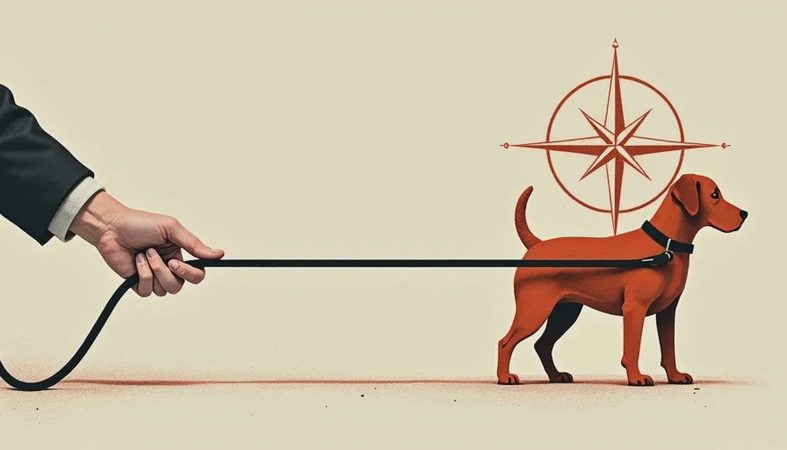
The pet store was supposed to be a quick stop.
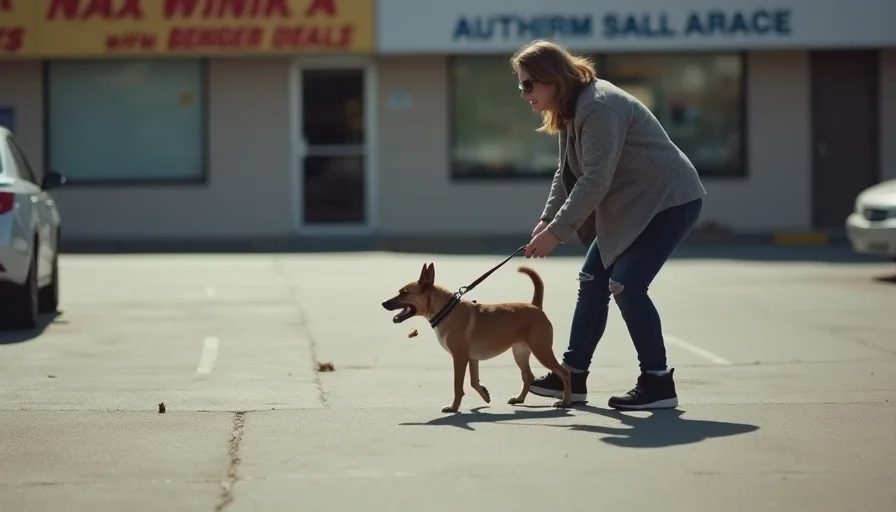
Ziggy had been doing better on ordinary neighborhood walks. I needed a bag of food and a replacement chew. I parked, clipped the leash, and told myself we would be in and out. Halfway across the parking lot another dog appeared near the entrance—medium size, on leash, handler looking at a phone. Distance was maybe forty feet. Well within what I had started to think of as workable.
Ziggy went from walking to full forward drive in one breath. The leash snapped tight. My shoulder took the force. My feet skidded on the warm asphalt. For a few long seconds I was simply being towed. People looked. Someone laughed. The other handler pulled their dog closer to the door. I eventually got Ziggy turned and back to the car, heart rate elevated, dignity somewhere near the storm drain.
I sat in the driver’s seat and stared at the steering wheel. Maple, who had stayed home, would never have created this scene. Ziggy panted in the back seat like he had just saved both of us from a threat only he could perceive.
That parking lot was not the beginning of his leash reactivity. It was the moment I stopped minimizing it.
What I Had Been Getting Wrong
I had been treating the problem as a manners issue. More walking. More “watch me.” Longer sessions near mild distractions. I was essentially asking a dog who already felt over threshold to perform better while the feeling itself remained unchanged.
I was also inconsistent about distance. Some days I gave him the space he needed. Other days I convinced myself that pushing a little closer would “build resilience.” The parking lot was the predictable result of that math. When the environment got harder than my optimistic assessment, the nervous system did what nervous systems do.
Equipment was not the main villain, but it was not helping. I was using a standard flat collar and a leash length that gave him enough room to build momentum. Once he hit the end of it, the force multiplied. A better harness and a plan for emergency U-turns would not have solved the emotional response, but they would have kept me on my feet and reduced the rehearsal of hard pulling.
Mostly I had been underestimating recovery. A hard reactive moment does not end when the other dog disappears. The residual arousal stays in the system. If the next stretch of the day includes more triggers, the stack builds. I had been treating each outing as a clean slate.
What Actually Changed
The first change was management, not training.
I stopped taking Ziggy into tight, unpredictable spaces while the pattern was still strong. Pet stores, busy parking lots, and narrow sidewalks at peak hours went on hold or became solo human errands. This was not permanent surrender. It was an acknowledgment that constant rehearsal of the full reactive display makes the display stronger.
On walks we began working at distances where he could see another dog and still take food. That distance was larger than I wanted it to be. I used the open-bar approach: other dog appears at a workable range, high-value food flows; other dog disappears, food stops. We were not practicing heeling into the trigger. We were changing the prediction attached to the sight of another dog.
I switched him to a well-fitted front-clip harness for these sessions. The point was not to correct him into position. The point was to reduce his ability to brace and pull with full force while we worked on the underlying response. I also practiced emergency exits—smooth U-turns and increased distance—until they were automatic for me. When I felt the leash tighten and saw the body language shift, I already knew the next move.
We tracked the work in simple terms: distance, dog’s body language, whether food was possible, how long recovery took afterward. The notes made the progress visible on days when it did not feel dramatic. They also made my own mistakes harder to ignore.
The Quiet Parts No One Sees
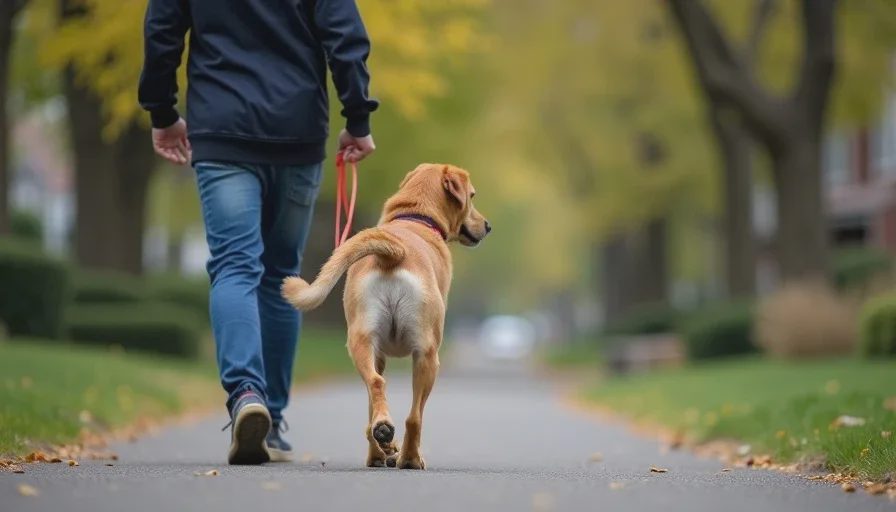
The parking-lot story is the one that gets told because it is vivid and a little humiliating. The real change lived in far less interesting repetitions.
Evening sessions in a quiet lot where a single known dog walked past at a measured distance. Short exposures followed by full decompression. Days when we turned around early because the first glance already put him too close to threshold. The decision to skip an outing entirely when the previous day had already used up his capacity.
I had to retire the story that a “good” dog should be able to handle any ordinary environment on any ordinary day. Ziggy’s nervous system did not read the pet-store parking lot as ordinary. Pretending otherwise only produced more asphalt skids and more residual stress.
Progress showed up as smaller things. He could look at another dog and look back to me. The recovery window after a sighting shortened. The number of full displays dropped. We eventually returned to some of the environments I had temporarily removed, but only after the emotional baseline had shifted and only with clear exit plans.
Maple continued to model a different way of moving through the world—alert when necessary, disengaged when possible, energy spent according to a budget I was still learning to respect in the younger dog.
What I Tell Clients Who Have Their Own Parking-Lot Story
You are not alone. The public nature of leash reactivity makes it uniquely shaming. Strangers watch. Other dog people form instant opinions. The temptation is to correct the display instead of addressing the conditions that produce it.
Start with honest distance. Change the meaning of the trigger before you demand polished behavior in its presence. Protect the dog from constant unmanaged exposure. Measure recovery as carefully as you measure the session itself. And drop the timeline that says this should already be fixed.
Ziggy still has hard moments. So do I. The difference is that I no longer treat those moments as proof that we have failed. They are information about threshold, stacking, and what needs to be adjusted next.
The parking lot taught me that louder than any training book. I only wish I had learned it before the asphalt burned a hole in my dignity.
Respect the dog.