I used to say “good dog” constantly.
It felt warm. It felt like the kind of person I wanted to be with animals. Ziggy would wag, Maple would occasionally acknowledge the sentiment with a slow blink, and I would feel as if I had reinforced something. Sometimes I had. Often I had only added a pleasant noise several seconds after the behavior I thought I was paying for.
Learning depends on information. The dog needs to know which exact moment earned the consequence. A vague phrase delivered late is mostly emotional wallpaper. It may support the relationship. It does not carve the behavior with any precision.
That is why I mostly stopped saying “good dog” as a training tool and started using a marker.
What a Marker Actually Does
A marker is a short, consistent signal that means “that—exactly that—is what is being reinforced.” The classic version is a clicker. A spoken word works just as well if you keep it consistent and clean. Mine is “yes.” Some people use “nice” or “yep.” The word itself does not matter. The contingency does.
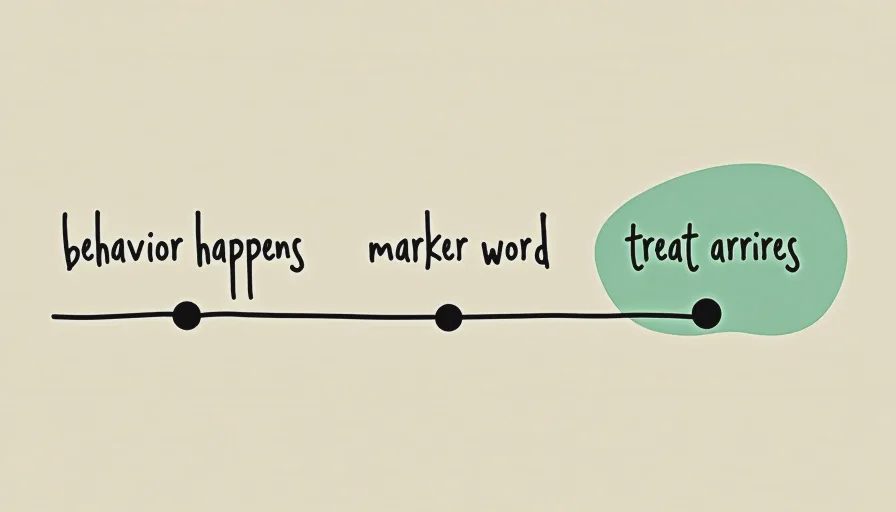
The sequence is simple:
The dog does the thing you want.
You mark the instant it happens.
You follow with the reward (usually food, sometimes a toy or access to something the dog wants).
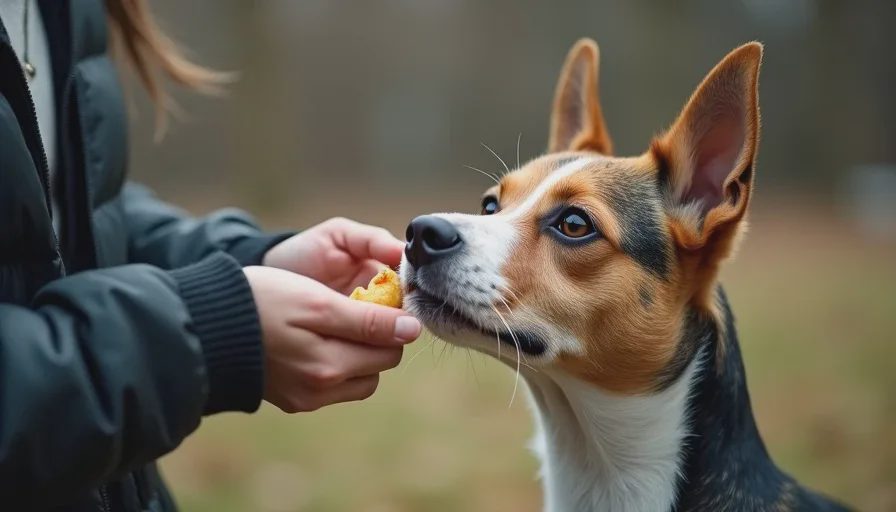
The marker bridges the gap between the behavior and the delivery of the reward. It buys you a few seconds to get the food out of your pocket without losing the connection to the correct moment. It also lets you reinforce positions or movements you cannot easily reward while the dog is still holding them.
“Good dog” can theoretically serve this function. In practice most of us say it too late, too often, and with too much emotional stretch. It becomes background noise. A dedicated marker stays sharp because it is reserved for the job.
Why Vague Praise Falls Short
Dogs are excellent at forming associations. They are not mind readers. When you say “good dog” while fumbling for a treat, while the dog has already moved on to the next behavior, or while you are actually looking at a different dog, the information gets muddy.
Common problems I see:
The phrase is used for everything—sitting, looking cute, stopping barking, existing near the couch—so it carries no specific meaning.
It arrives after a chain of behaviors, so the dog cannot tell which part was valuable.
It is paired with no actual reward often enough that it becomes pure talk.
It is said in a long, singsong way that takes more time than a clean marker and therefore lands later.
None of this makes someone a bad owner. It just makes the feedback less useful for precise learning. Relationship warmth and clear training information can coexist. They do not have to be the same phrase.
What I Say Instead
In working sessions I use:
“Yes” the moment the correct behavior happens.
Then the food (or toy, or release to the environment).
Outside formal sessions I still talk to the dogs like a normal person. I tell them they are ridiculous. I narrate the day. I use soft praise when we are simply living together. I do not ask those conversational noises to carry the weight of skill-building.
When I want to reinforce a real-life choice—Ziggy glancing at another dog and then looking back, Maple settling on her bed when guests arrive—I mark and pay. The marker stays consistent. The payment stays consistent enough that the marker keeps its meaning.
I also teach a release cue (“free” or “okay”) so the dog knows when a held position is finished. That keeps “yes” from becoming a release on its own and preserves its job as pure information: that instant was correct.
How to Switch Without Confusing the Dog
You do not need a ceremony.
Pick a short word you do not already use constantly in conversation. Start using it in easy situations where you can time it well—hand target, simple sit, eye contact. Mark the moment, then treat. Repeat until the dog begins to respond to the marker itself with clear expectation of payment.
Then take it on the road. Mark the first calm glance toward a trigger. Mark four feet on the floor instead of jumping. Mark the decision to go to a mat. Keep the payment real. If you mark without paying too often, the marker weakens.
If you have been saying “good dog” for years, you can keep saying it for affection. Just stop asking it to do the precision work. Give that job to a cleaner signal.
What Changed for Us
Ziggy’s learning sped up once the feedback got clearer. He could tell which of the many things he was doing had earned the chicken. The guesswork dropped. So did some of my own frustration. When a session went poorly, it was easier to see whether my timing had been late or my criteria had jumped too far.
Maple, who already knew most of what I asked, treated the marker as useful information and otherwise continued to live by her own efficient standards. She has never needed a lot of talk. She has always needed clear consequences.
I still slip. There are days I hear myself saying “good dog” in a training context out of old habit. Then I mark the next correct moment properly and move on. The system does not require perfection. It requires that the dog receive timely, specific information more often than not.
Warmth matters. Clear information matters. They are not the same tool. Once I stopped asking a single vague phrase to do both jobs, the training got cleaner and the relationship did not get colder. If anything, Ziggy became more optimistic about working with me because the rules of payment were finally legible.
Respect the dog.