
Ziggy was under the dining table, shaking, while I stood in the kitchen holding a treat I suddenly felt too embarrassed to offer. I had read three training blogs, watched two videos, and still had no idea what to do. Behavioral dog training became real to me in that moment: not a set of tricks, but a way to understand what my dog was communicating.
If your dog barks at strangers, freezes when you leave, guards food, or melts down on walks, you are not living with a bad dog. You are living with a dog whose behavior is meeting a need, reducing fear, creating distance, or obtaining something valuable. The work is to identify that function and teach a safer response. Respect the dog, then change the plan.
What Behavioral Dog Training Actually Means
Behavioral dog training addresses emotional responses and patterns, not only obedience cues. Sit, stay, and come are useful skills, but they do not automatically resolve separation anxiety, fear of handling, leash reactivity, or tension between household dogs. A dog can perform a perfect sit in the living room and still panic when a delivery person approaches the door.
A science-backed approach begins with observation. What happens immediately before the behavior? What does the dog do? What changes afterward? This is the basic antecedent-behavior-consequence sequence. If lunging makes another dog move away, the relief can reinforce lunging. If barking earns access to the yard, barking can become a reliable strategy.
Behavioral dog training replaces guesswork with a practical hypothesis. That does not mean turning your home into a laboratory. It means writing down enough detail to notice patterns: distance from a trigger, time of day, body language, food used, recovery time, and whether the dog could eat. Those details tell you when learning is possible and when the environment is simply too difficult.

Start With Safety and Management
Training cannot work well when a dog rehearses the unwanted behavior every day. Management is not giving up; it is creating enough breathing room for new learning. Use baby gates, closed doors, window film, a covered crate if your dog finds it calming, or a quiet walking route with more space. For resource guarding, do not reach into a bowl or take an item by force. Separate people and animals, then get qualified help.
A useful traffic-light system keeps decisions simple. Green means your dog can notice the trigger, eat, move, and respond to you. Yellow means the dog is staring, stiffening, pacing, or taking treats roughly. Red means barking, lunging, snapping, fleeing, or refusing food. Practice in green, adjust the distance in yellow, and stop the exercise in red. In behavioral dog training, distance is information, not failure.
Safety also includes a veterinary conversation. Pain, illness, sensory changes, and other medical factors can affect behavior. A veterinarian can evaluate those possibilities and discuss whether anti-anxiety medication might be appropriate. Medication is not a replacement for training; for some dogs, it can lower distress enough for training to become possible.
Choose Reinforcement Over Intimidation
Reward-based training reinforces behavior you want to see with something the dog values. That might be chicken, a tug toy, sniffing, access to the yard, or the chance to greet a trusted person. The reward should arrive immediately after the useful choice, so the dog can connect action and outcome.
This is not permissive training. I can calmly interrupt Ziggy from chasing Maple, guide him behind a gate, and reinforce quiet behavior without shouting or using a shock collar. Clear boundaries and humane methods are compatible. The question is whether the plan teaches a replacement behavior or merely suppresses an outward signal.
Research matters here. Hiby, Rooney, and Bradshaw’s 2004 study in Animal Welfare found that reward-based methods were associated with greater obedience and fewer reported problem behaviors than punishment-based methods. Herron, Shofer, and Reisner’s 2009 study in the Journal of Veterinary Behavior also documented concerning responses associated with confrontational techniques. Behavioral dog training should reduce fear, not add another reason for a dog to feel unsafe.
Build a Training Plan for Common Problems
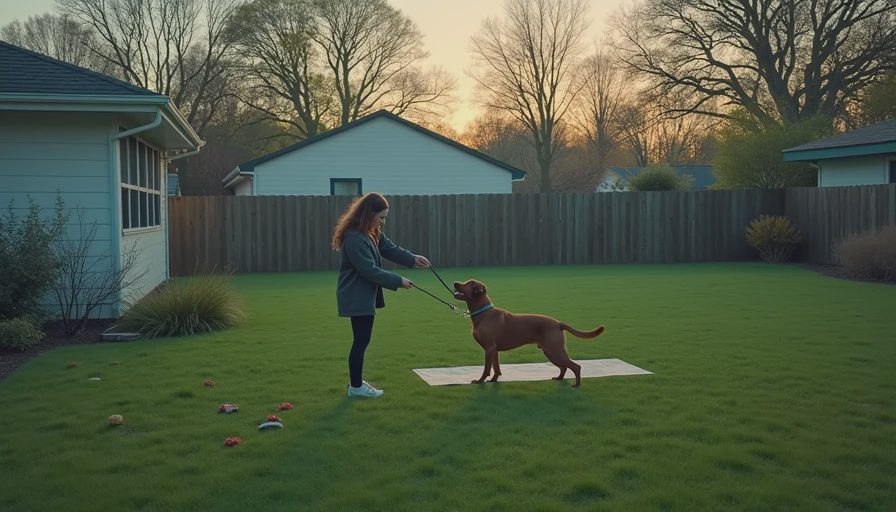
For leash reactivity, begin far enough away that your dog can see another dog and still eat. The instant your dog notices the trigger, feed several small treats, then walk away before tension rises. Over repeated sessions, the trigger predicts good things and the dog gets practice turning back to you. Do not measure success by passing closely; measure it by calmer observation and faster recovery.
For separation-related distress, start with absences your dog can handle, sometimes only a few seconds. Use a camera if possible, because vocalizing, pacing, panting, or scratching can occur when you are out of sight. Increase duration gradually and vary it instead of making every absence longer. If your dog panics, return to an easier step. Behavioral dog training is not a test of endurance.
For guarding, trade rather than grab. From a safe distance, toss a better treat away from the guarded item, wait for the dog to move, and retrieve the item only when appropriate. Never involve children in this exercise. A professional should guide serious guarding, bite history, or conflict between dogs. Look for an IAABC-certified consultant, a veterinary behaviorist, or a trainer who clearly explains reward-based methods.
Track Progress Without Demanding Perfection
Use a simple weekly log with five fields: trigger, starting distance, body language, response, and recovery time. Add the reward that worked. A dog who still barks but recovers in thirty seconds instead of five minutes is making meaningful progress. A dog who needs more distance on a stressful day is giving you useful data, not disappointing you.
Progress is rarely a straight line. Ziggy once handled a quiet sidewalk beautifully, then unraveled because a truck backfired near us. I cried in the parking lot, bought an unnecessarily expensive coffee, and went home. The next session was easier because I stopped treating one hard moment as a verdict on the entire plan. Behavioral dog training works better when the human can adjust without shame.
Keep expectations specific. “Be friendly” is not a workable goal. “Look at the trigger, eat three treats, and turn away with me” is observable. “Never bark” is often unrealistic. “Recover within two minutes and settle behind the gate” gives you something you can practice and measure.
When to Get Professional Support
Contact a qualified professional when there is a bite, repeated snapping, severe separation distress, escalating resource guarding, panic, self-injury, or household conflict. In-person help can reveal details that are hard to see while you are also managing the leash. Ask how the consultant handles fear, what tools they use, how they define success, and whether they coordinate with your veterinarian.
Avoid anyone who promises a fixed timeline, labels your dog dominant as a complete explanation, or says punishment is the only language dogs understand. Good behavioral dog training should leave you with a safety plan, management steps, measurable exercises, and a way to adjust difficulty. You should understand why each step exists.
Start tonight with one observation rather than one correction. Notice what your dog sees, what their body does, and what happens next. Then make tomorrow’s version easier: more distance, fewer distractions, shorter duration, or a better reward. Your dog does not need a perfect guardian. They need a guardian willing to listen, learn, and keep everyone safe. Respect the dog.