I do not take Ziggy to dog parks.
That is not a moral position. It is a risk assessment that has stayed consistent for years. Maple has been a selective visitor at quieter times and has also walked past the gate more often than she has entered. The decision is never only about the dog in front of me. It is about the environment I cannot fully control once we step through.
Dog parks are sold as social enrichment and exercise. Sometimes they deliver both. Sometimes they deliver rehearsed reactivity, over-arousal, intimidation, or injury. The difference is rarely visible in the marketing. It is visible in the first sixty seconds at the gate if you know what to look for.
Why the Stakes Are Higher Than They Look
A dog park concentrates unknown dogs, unknown histories, and variable human supervision into a relatively small space. Arousal spreads. One tense interaction can change the emotional tone for every dog present. Dogs who would choose distance in an open setting cannot always get it when the fence line and the group movement box them in.
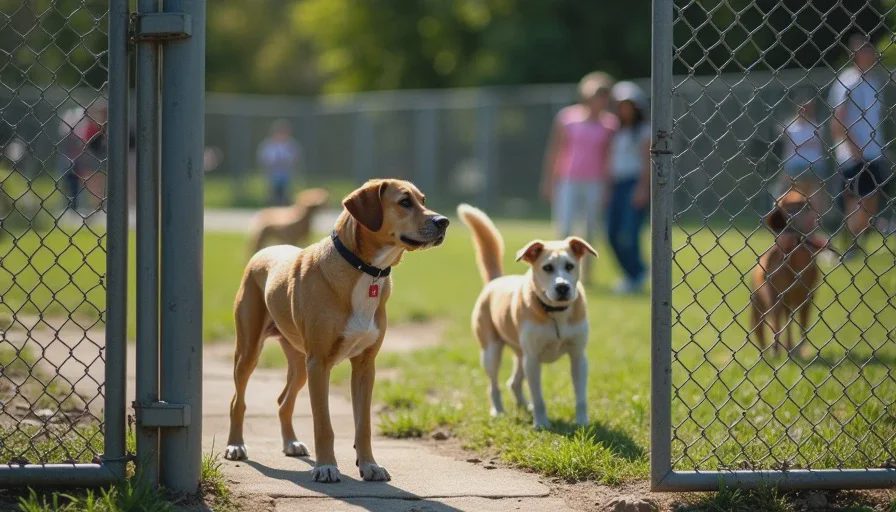
Research on free play and social behavior in dogs consistently shows that quality matters more than quantity. Play that stays reciprocal, with clear breaks and matched intensity, can be beneficial. Play that includes repeated targeting, ignored signals, or escalating arousal is not enrichment. It is practice for conflict. Many public parks contain both kinds of interaction at the same time, which means your dog is rolling the dice on which one they encounter.
Add the fact that many handlers are distracted, late to intervene, or unsure what healthy play even looks like, and the environment becomes harder to justify for a dog who is already working through reactivity, fear, or poor recovery.
Ziggy’s early leash reactivity and general sensitivity made parks an obvious mismatch. Even now, the cost-benefit rarely favors entry. The potential upside is unstructured social time. The downside is a single bad encounter that undoes weeks of careful threshold work.
The 60-Second Gate Assessment
You do not need a long study session. You need a deliberate scan before the leash comes off.
1. Look at the overall arousal level.
Are most dogs moving with soft bodies and loose curves, or is the space full of hard sprinting, piling, and high, tight tails? A park already running hot is a poor entry point. You can always come back later.
2. Watch for targeting and ignored signals.
Is one dog repeatedly pursuing another who is turning away, lip-licking, or trying to create distance? Are there humans intervening, or is the pursuit continuing unchallenged? Persistent targeting is one of the clearest red flags.
3. Check the handlers.
Are people watching their dogs or their phones? When something tense happens, do they step in promptly and competently? A park full of disengaged owners is a park where your dog is more alone than the fencing suggests.
4. Assess exit options and space.
Can you get your dog out quickly if the picture changes? Is the gate area congested? Are there corners where a dog can be trapped against the fence? Physical design matters as much as behavior.
5. Know your own dog’s current capacity.
Has today already included other stressors? Is your dog recovering from a hard week, a vet visit, or a string of reactive moments? Trigger stacking does not pause at the park entrance. A dog who is already near threshold is a poor candidate for a high-stimulation social free-for-all.
If two or more of these checks look poor, keep walking. The decision can be that fast.
What “Good” Looks Like When You Do Enter
Even a green-light scan does not mean unlimited freedom.
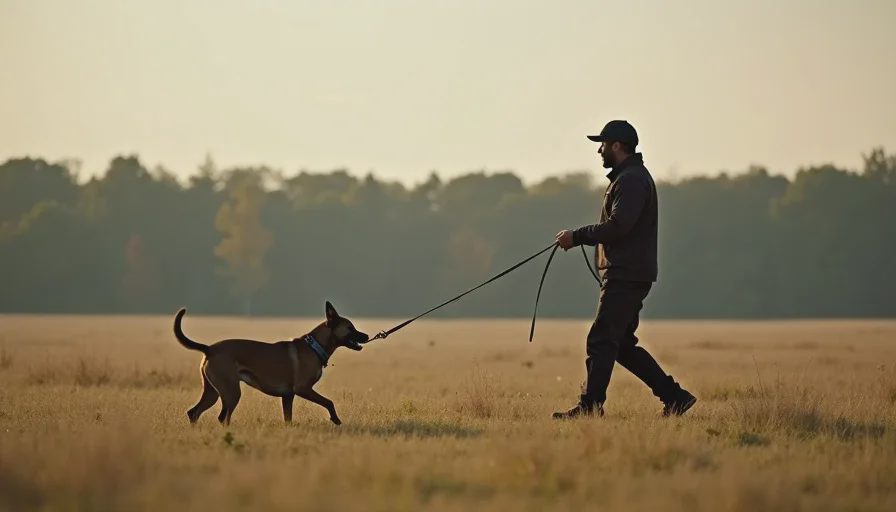
Stay present. Move through the space rather than planting yourself in one spot and hoping for the best. Call your dog out of play frequently for a brief reset and reward—this keeps a recall functional and breaks arousal before it spikes. Leave while things are still going well. Ending on a successful note is more useful than squeezing out the last ten minutes until someone gets overwhelmed.
If your dog is routinely targeted, repeatedly mounts, guards, or shows stiff, hard body language, the park is giving you information. That information is usually “this format is not a fit,” not “try harder and stay longer.”
Better Options for Most Dogs
Many of the needs people hope a dog park will meet can be met with lower risk.
Sniff-focused walks on a long line in quieter areas. Structured play with known, compatible dogs in controlled settings. Solo off-leash time in safe, legal spaces if you have access. Training sessions that include movement and problem-solving. Rest.
Maple has gotten more genuine value from calm parallel time near other dogs she already knows than from anonymous group play. Ziggy gets more welfare benefit from a long sniff session and a clear recovery period than from any park visit I have ever considered.
Social contact is a need for many dogs. Anonymous, high-arousal, poorly supervised contact is not the only way to meet it—and for a large percentage of dogs it is one of the worse ways.
The Honest Bottom Line
Dog parks are tools, not moral requirements. Some dogs thrive in the right park at the right time with the right handling. Many dogs do better without them. A few are actively harmed by repeated exposure to the wrong conditions.
The useful skill is not loyalty to the idea of the dog park. It is the ability to stand at the gate, take sixty seconds, and decide based on the actual scene in front of you—the dogs, the humans, the space, and the animal at the end of your leash.
If the picture is messy, you can leave. That is not a failure of socialization. It is competent risk management.
Respect the dog.